


API 5L Grade B PSL1 vs PSL2: Differences, Specifications & Selection Guide
Wen purchasing API 5L Grade B line pipe, one of the most important decisions for engineers, contractors, and procurement teams is choosing between PSL1 and PSL2.
Although both API 5L Grade B PSL1 and PSL2 pipes comply with the API 5L standard, they are designed for different levels of quality control, testing requirements, and pipeline applications. Selecting the wrong Product Specification Level (PSL) may result in unnecessary costs, project delays, or failure to meet engineering requirements.
For oil and gas pipeline projects, buyers need to understand:
What is API 5L Grade B pipe?
What is the difference between PSL1 and PSL2?
Which PSL level is suitable for your application?
How should you specify API 5L Grade B pipe when sourcing from China?
This guide explains the key differences between API 5L Grade B PSL1 vs PSL2 and helps global buyers make the right purchasing decision.
What Is API 5L Grade B Pipe?
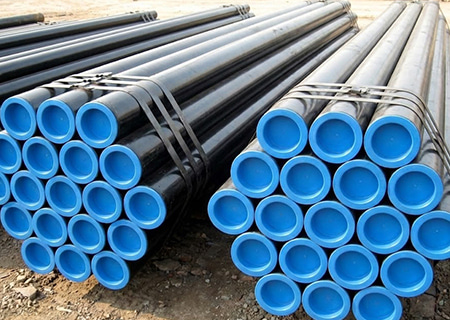
API 5L Grade B pipe is a carbon steel line pipe manufactured according to the American Petroleum Institute (API) Specification 5L standard.
It is widely used for transporting:
Crude oil
Natural gas
Petroleum products
Water
Other industrial fluids
API 5L Grade B is one of the most commonly used pipeline grades because it provides a good balance between strength, weldability, and cost efficiency.
The equivalent metric designation of API 5L Grade B is:
L245
Typical mechanical properties include:
Minimum yield strength: approximately 245 MPa
Minimum tensile strength: approximately 415 MPa
API 5L Grade B pipes can be supplied in different manufacturing processes, including:
Seamless pipe
ERW pipe
LSAW pipe
SSAW pipe
Depending on project requirements, buyers can select different production methods, pipe sizes, and PSL levels.
What Does PSL Mean in API 5L?
PSL stands for Product Specification Level.
API 5L defines two main quality levels:
| Product Specification Level | Meaning |
|---|---|
| API 5L PSL1 | Standard quality requirements |
| API 5L PSL2 | More stringent quality and testing requirements |
PSL does not represent the strength grade of the pipe. Instead, it defines the manufacturing control, inspection, testing, and documentation requirements.
In simple terms:
PSL1 focuses on basic material performance and standard production requirements.
PSL2 requires stricter chemical control, mechanical property limits, additional testing, and improved traceability.
API 5L Grade B PSL1 vs PSL2 Comparison
The main differences between API 5L Grade B PSL1 and PSL2 are related to:
Chemical composition
Mechanical properties
Impact testing
Non-destructive testing
Documentation
Traceability
| Requirement | API 5L Grade B PSL1 | API 5L Grade B PSL2 |
|---|---|---|
| Quality Level | Standard | Enhanced |
| Application | General pipeline service | Critical pipeline projects |
| Chemical Control | Basic requirements | Strict chemical limits |
| Carbon Equivalent | Not mandatory | Controlled |
| Yield Strength | Minimum requirement | Minimum and maximum limits |
| Tensile Strength | Minimum requirement | Minimum and maximum limits |
| Charpy Impact Test | Usually not mandatory | Mandatory |
| NDT Inspection | Standard requirements | More comprehensive inspection |
| Traceability | Basic | Full heat and pipe traceability |
| Cost | Lower | Higher |
PSL2 introduces additional requirements to improve pipeline reliability, especially for demanding operating environments.
Chemical Composition Difference Between API 5L Grade B PSL1 and PSL2
Chemical composition is one of the most important differences between API 5L Grade B PSL1 and PSL2.
PSL2 requires tighter control over chemical elements such as:
Carbon
Sulfur
Phosphorus
Alloying elements
Compared with PSL1, PSL2 has stricter chemical requirements to improve:
Weldability
Crack resistance
Toughness
Long-term pipeline reliability
| Element | API 5L Grade B PSL1 | API 5L Grade B PSL2 |
|---|---|---|
| Carbon | Standard limit | Lower controlled limit |
| Sulfur | Higher allowable limit | Lower allowable limit |
| Phosphorus | Standard limit | Reduced limit |
| Carbon Equivalent | Not required | Mandatory control |
Lower sulfur and phosphorus levels help reduce brittleness and improve resistance to cracking during pipeline operation.
Mechanical Properties Comparison: API 5L Grade B PSL1 vs PSL2
Both PSL1 and PSL2 API 5L Grade B pipes have similar minimum strength requirements. However, PSL2 introduces stricter controls for material consistency and performance.
Yield Strength
For API 5L Grade B pipe, the minimum yield strength requirement is:
245 MPa
The difference between PSL1 and PSL2 is:
API 5L Grade B PSL1:
Only requires minimum yield strength.
No maximum yield strength requirement.
API 5L Grade B PSL2:
Requires minimum yield strength.
Requires maximum yield strength control.
This additional control ensures more consistent mechanical performance and reduces the risk of unexpected material behavior during pipeline operation.
Tensile Strength
The minimum tensile strength requirement for API 5L Grade B is approximately:
415 MPa
The difference includes:
PSL1: Only specifies minimum tensile strength requirements.
PSL2: Controls both minimum and maximum tensile strength values.
Controlling tensile strength helps improve material reliability, welding performance, and pipeline safety.
Testing Requirements: Why PSL2 Costs More?
Many buyers notice that API 5L Grade B PSL2 pipe usually has a higher price than PSL1 pipe. The main reason is the additional manufacturing control and inspection requirements.
API 5L Grade B PSL1 Testing Requirements
Typical PSL1 testing includes:
Chemical analysis
Tensile testing
Hydrostatic testing
Basic dimensional inspection
API 5L Grade B PSL2 Testing Requirements
PSL2 requires additional quality control procedures, including:
1. Charpy Impact Testing
Charpy impact testing evaluates the toughness of steel pipe under low-temperature conditions.
It is especially important for:
Cold climate pipeline projects
Offshore pipeline systems
High-pressure transmission pipelines
2. Non-Destructive Testing (NDT)
API 5L Grade B PSL2 pipes require stricter inspection methods, including:
Ultrasonic testing
Radiographic testing
Additional surface inspection
These inspection methods help identify internal defects and ensure pipeline safety.
3. Full Traceability
PSL2 requires stronger traceability control throughout the manufacturing process.
Documentation may include:
Heat number tracking
Mill test certificates (MTC)
Production records
Inspection reports
This allows buyers and project owners to verify the complete production history of each pipe.

API 5L Grade B PSL1 vs PSL2 Applications
The selection between PSL1 and PSL2 depends on project requirements, operating conditions, and customer specifications.
When Should You Choose API 5L Grade B PSL1?
API 5L Grade B PSL1 is suitable for applications where standard quality requirements are sufficient.
Typical applications include:
Water transmission pipelines
General industrial pipelines
Low-pressure fluid transportation
Non-critical pipeline systems
Advantages of PSL1:
Lower purchase cost
Shorter production time
Suitable for standard pipeline applications
When Should You Choose API 5L Grade B PSL2?
API 5L Grade B PSL2 is recommended for more demanding pipeline applications requiring higher quality control.
Typical applications include:
Oil and gas transmission pipelines
Offshore pipeline projects
Sour service pipelines
High-pressure pipeline systems
Extreme temperature environments
Advantages of PSL2:
Higher quality consistency
Better toughness performance
Stricter chemical control
Improved welding performance
Complete material traceability
API 5L Grade B PSL1 vs PSL2: Which One Should You Buy?
Choosing the right API 5L Grade B PSL level depends on your project specifications, operating environment, and quality requirements.
Choose API 5L Grade B PSL1 If:
Your project specification allows PSL1.
Cost optimization is an important factor.
The pipeline operates under normal service conditions.
Advanced impact testing is not required.
The application does not involve extreme environments.
Choose API 5L Grade B PSL2 If:
Pipeline safety and reliability are critical.
The project involves oil and gas transmission.
The pipeline operates under high pressure.
Offshore or sour service requirements exist.
Strict documentation and traceability are required.
Third-party inspection is specified by the project owner.
For most critical oil and gas pipeline projects, API 5L Grade B PSL2 pipe is preferred because it provides enhanced quality control and improved reliability.
How to Order API 5L Grade B Pipe from China?
When sourcing API 5L Grade B line pipe from China, buyers should provide complete technical specifications to ensure the supplier can offer the correct product.
The key purchasing information includes:
1. Pipe Grade
Specify the required steel grade:
API 5L Grade B
API 5L X42
API 5L X52
API 5L X60
Other API 5L grades
2. PSL Requirement
Clearly confirm whether you need:
API 5L Grade B PSL1
API 5L Grade B PSL2
3. Manufacturing Type
Select the appropriate manufacturing process according to application requirements:
Seamless steel pipe
ERW line pipe
LSAW pipe
SSAW pipe
4. Pipe Dimensions
Provide detailed dimensions, including:
Outside diameter
Wall thickness
Pipe length
Quantity required
5. Certification and Inspection Requirements
Depending on project requirements, buyers may request:
Mill Test Certificate (MTC)
API certificate
Third-party inspection
Hydrostatic testing report
NDT inspection report
Providing accurate specifications helps suppliers recommend the correct API 5L Grade B pipe solution and avoid unnecessary cost increases.
Why Choose Yuan Steel Pipe for API 5L Grade B Pipe?
As a professional API 5L Grade B pipe supplier in China, Yuan Steel Pipe provides reliable pipeline steel solutions for international customers in oil & gas, energy, construction, and industrial sectors.
1. Comprehensive API 5L Product Supply
Yuan Steel Pipe supplies a wide range of API 5L line pipe products, including:
API 5L Grade B PSL1 pipe
API 5L Grade B PSL2 pipe
API 5L seamless pipe
API 5L ERW pipe
Carbon steel line pipe
With multiple product options, buyers can select suitable pipe solutions based on pressure requirements, application conditions, and project specifications.
2. Reliable Supply Capacity and Inventory Support
Yuan Steel Pipe has strong supply chain resources and inventory capability to support:
Large quantity procurement
Engineering projects
Distributor stock requirements
Urgent delivery schedules
This helps international buyers reduce procurement risks and improve project efficiency.
3. Strict Quality Control for Global Standards
Quality is critical for pipeline applications. Yuan Steel Pipe follows strict inspection procedures to ensure products meet customer requirements.
Quality services include:
Material inspection
Dimensional inspection
Mill Test Certificate (MTC) supply
Third-party inspection support
Production tracking
4. Professional Export Experience
Yuan Steel Pipe serves international customers with experience in global steel pipe supply.
The company supports customers from different regions, including:
Oil and gas companies
EPC contractors
Pipeline engineering companies
Steel distributors
Professional export experience allows Yuan Steel Pipe to provide efficient communication, documentation support, and international shipment arrangements.
5. Customized API 5L Pipe Solutions
Every pipeline project has different requirements. Yuan Steel Pipe provides customized solutions based on:
Pipe diameter
Wall thickness
PSL level
Manufacturing process
Inspection requirements
Delivery destination
FAQ About API 5L Grade B PSL1 and PSL2
Q1: What is the difference between API 5L Grade B PSL1 and PSL2?
API 5L Grade B PSL2 has stricter chemical composition requirements, mechanical property controls, impact testing requirements, and traceability compared with PSL1.
Q2: Is API 5L Grade B PSL2 better than PSL1?
PSL2 provides higher quality control and is recommended for critical applications such as oil and gas transmission pipelines, offshore projects, and high-pressure pipeline systems.
Q3: Is API 5L Grade B PSL2 more expensive?
Yes. PSL2 usually costs more because it requires additional testing, stricter manufacturing control, and more detailed inspection documentation.
Q4: Which PSL level is commonly used for oil and gas pipelines?
Many oil and gas pipeline projects specify API 5L Grade B PSL2 because of its improved quality consistency, toughness, and traceability requirements.
Request API 5L Grade B PSL1 or PSL2 Pipe Quote
Selecting the correct PSL level is essential for pipeline safety, project compliance, and long-term performance.
Yuan Steel Pipe can provide professional support for:
API 5L Grade B PSL1 pipe
API 5L Grade B PSL2 pipe
API 5L line pipe solutions
Carbon steel pipeline products
Contact Yuan Steel Pipe today and share your project requirements, including pipe size, quantity, PSL level, and destination port. Our team will help you select the right API 5L Grade B pipe solution for your application.
Please Contact Us!
Recent News
1.API 5L Grade B Pipe Buying Guide for Oil and Gas Pipeline Projects
2026-08-212.How to Find a Reliable API 5L Pipe Stockist in China?
2026-08-113.How to Choose a Reliable China API 5L Line Pipe Supplier?
2026-07-174.Top 10 API 5L Pipe Stockists and Distributors 2026
2026-06-265.A106B Seamless Carbon Steel Pipe for High-Temp Applications
2026-06-026.Top 10 ASTM A106 Grade B Steel Pipe Suppliers in China 2026
2026-05-28


