


API 5L Grade B Pipe Buying Guide for Oil and Gas Pipeline Projects
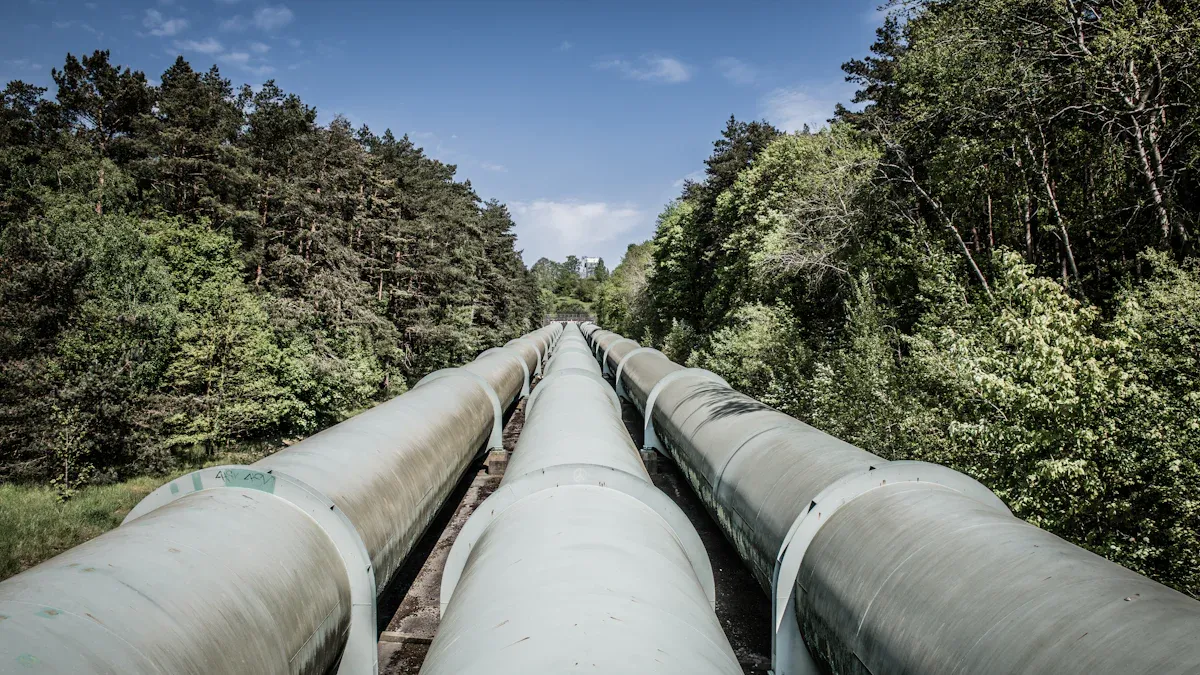
Picking the right pipe keeps project costs down and ensures safety for your oil, gas, and liquid pipelines. Energy project managers often choose api-5l grade b carbon steel pipe, which standards also call L245 steel. This material provides strong support and connects very well during field welding. It is a budget-friendly and easy-to-find option compared to pricey alloy pipes. You can save money on buying supplies without losing safety or lowering pressure performance. This guide helps you easily check material details, Product Specification Levels, making methods, protective coatings, and global suppliers. You will get approved materials quickly.
Key Takeaways
API 5L Grade B carbon steel pipes provide budget-friendly toughness and simple welding for medium-pressure energy pipelines.
Pick PSL2 specification pipes instead of PSL1 for cold weather strength, stricter chemical limits, and tough sour service conditions.
Choose seamless pipes for high-pressure setups or pick welded options like ERW, LSAW, and SSAW to save extra money.
Put 3LPE or FBE outer layers on underground steel pipes to shield them from wet dirt and strong chemical rust.
API 5L Grade B Specifications
Chemical and Mechanical Properties
API 5L Grade B steel gives reliable mechanical power for medium-pressure pipeline systems. You can check the essential strength and weight limits of this steel by looking at precise standard numbers.
Property | Minimum Value |
|---|---|
Yield Strength | 35,500 psi (approximately 245 MPa) |
Tensile Strength | 60,200 psi (approximately 415 MPa) |
The chemical mix controls field welding quality and metal hardness. Official rules set clear element caps for carbon, manganese, phosphorus, and sulfur.
Element | Limit |
|---|---|
Carbon | 0.22% – 0.29% |
Manganese | 1.15% – 1.50% |
Phosphorus | max 0.035% |
Sulfur | max 0.035% |
You need to track the carbon equivalent (CE) rating when putting in pipes.
CE < 0.35: Usually easy to weld without preheating in normal weather
Keeping the carbon equivalent low stops cold cracks from forming during outdoor welding work.
API 5L Grade B vs ASTM A106 B
Engineers frequently review api-5l grade b line pipe against ASTM A106 Grade B and ASTM A53 Grade B options. You must pick the proper pipe material after reviewing your job site conditions and heat levels.
Property | API 5L Grade B | ASTM A106 Grade B |
|---|---|---|
Primary Use | Pipeline transportation of oil, gas, and water | High-temperature process service |
Primary Application | Pipeline Transportation | High-Temperature Process Piping |
Max Temperature Rating | 260°C (500°F) | 425°C (800°F) |
These two standards target completely different fluid system needs.
API 5L Grade B: Built to move gas, water, and oil through long pipelines.
ASTM A106 Grade B: Made for hot, high-pressure setups in power stations, boilers, chemical sites, and refineries.
API 5L pipe targets long-distance fluid delivery and field bending flexibility. ASTM A106 Grade B resists heavy heat expansion inside processing plants. You prevent expensive early pipe breaks when you match the right specification to your building design.
PSL1 vs PSL2 for API 5L Grade B Pipe
You must select the correct Product Specification Level when ordering pipe for your energy transport projects. Standard API rules divide line pipes into Product Specification Level 1 (PSL1) and Product Specification Level 2 (PSL2). PSL1 provides a standard quality grade suitable for general, low-stress pipe applications. PSL2 imposes much stricter requirements on steel chemistry, toughness, maximum yield strength, and non-destructive testing. You protect your job site against sudden pressure pipeline failures by matching the right specification level to your operational environment.
Impact Testing and Chemistry Limits
PSL2 line pipes require comprehensive physical and chemical verification that PSL1 pipes do not demand. PSL1 standards set no mandatory requirements for Charpy V-Notch impact toughness testing. PSL2 mandates rigorous Charpy V-Notch impact testing at 0°C to guarantee that the steel resists brittle fractures during cold weather or high-stress surges.
Average mandatory minimum impact energy: 27 J (20 ft-lbf)
Minimum single impact value: 20 J (15 ft-lbf)
PSL2 standards also introduce mandatory maximum caps on yield strength and tensile strength. PSL1 only defines minimum strength limits, which can allow unpredictable metal hardness and difficult field bending. PSL2 restricts the maximum yield strength to ensure predictable deformation and prevent field welding failures. Furthermore, PSL2 enforces tighter chemistry limits for carbon, phosphorus, and sulfur. Lower carbon equivalent ratings improve field weld quality without requiring preheating procedures. Lower sulfur and phosphorus contents refine the internal steel structure, making the pipe far more resistant to lamellar tearing and internal stress cracks.
Standard vs SOUR Service Selection
Standard pipeline projects moving sweet gas, refined oil, or clean industrial water perform smoothly using PSL1 api-5l grade b line pipes. However, severe operating environments containing corrosive hydrogen sulfide gas require PSL2 pipes specifically qualified for sour service. Sour service conditions cause severe hydrogen-induced cracking and sulfide stress cracking in standard carbon steel line pipe.
You must order PSL2 pipe manufactured and certified under NACE MR0175/ISO 15156 standards when your transported fluid contains hydrogen sulfide. Sour service specifications mandate strict maximum limits on impurity elements to ensure complete structural safety and prevent sudden environmental leaks.
Element | Maximum Content (%) |
|---|---|
Phosphorus | 0.025 |
Sulfur | 0.015 |
Sour service rules require fully killed steel practice with a mandatory minimum silicon content of 0.10%. The continuous operating temperature of the pipeline system must remain strictly below 260°C (500°F). Steel mills must carefully control heat treatment through normalizing or quenching and tempering processes. Mill technicians must perform mandatory hardness testing across the base metal, weld metal, and heat-affected zone. The measured hardness cannot exceed 22 HRC (248 HV) at any tested location.
Your purchase order must explicitly request sour service qualification and reference NACE MR0175/ISO 15156 standard requirements. Dual-certified api-5l grade b and ASTM A106 Grade B pipe remains completely acceptable if mill documentation proves compliance with both specifications. You must review complete Mill Test Certificates (MTC 3.1) containing heat chemistry, tensile results, impact toughness numbers, and mandatory hardness testing reports prior to accepting pipe deliveries. Selecting the proper specification level guarantees regulatory compliance, eliminates pipeline failure risks, and protects your long-term infrastructure investment.
Manufacturing Types: Seamless vs Welded
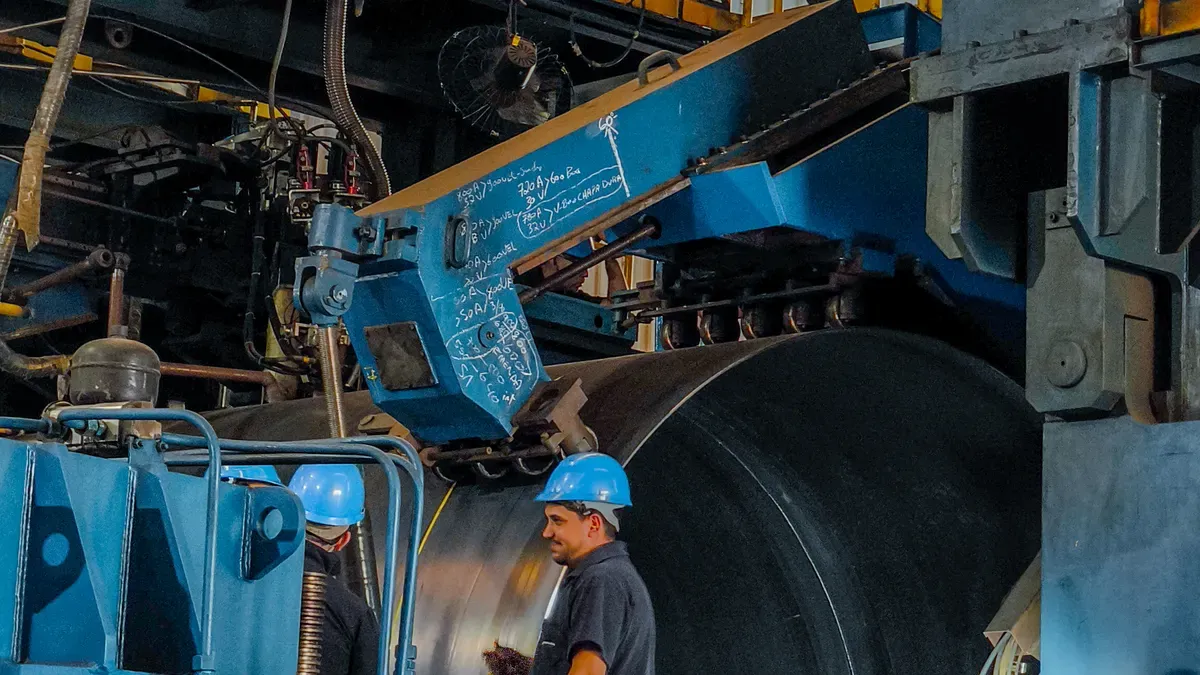
Picking the right production method directly impacts overall project safety, pipe strength under pressure, and total project costs. You can compare pipe options across four main manufacturing types: Seamless, Electric Resistance Welded (ERW), Longitudinal Submerged Arc Welded (LSAW), and Spiral Submerged Arc Welded (SSAW). Every process provides special practical benefits suited for specific outer sizes, wall thickness needs, and operating pressure limits.
Manufacturing Method | Diameter Range | Operating Pressure Range | Primary Project Advantage |
|---|---|---|---|
Seamless | Up to 26 inches | Very High Pressure | Maximum integrity without longitudinal welds |
ERW | 2 to 24 inches | Medium to High Pressure | Cost-effective with precise wall tolerances |
LSAW | 16 to 56 inches | High Pressure / Thick Wall | Exceptional strength for severe environments |
SSAW | 20 to 100+ inches | Low to Medium Pressure | Economical choice for large diameter lines |
Seamless Line Pipe Applications
Seamless line pipes do not have any straight or spiral weld lines along their length. Special factory machines pierce a solid steel block to create a continuous, solid steel tube. This smooth single-piece design removes possible weak spots along welded seams. It offers dependable long-term fluid holding power under high internal pressure loads.
Seamless pipes offer uniform directional strength, making them the default choice for high-pressure loops, manifold piping, refinery boundaries, and offshore risers.
Oil refineries choose seamless API 5L Grade B line pipe because tough processing conditions demand maximum strength. Critical high-pressure loops need complete structural reliability during heavy physical stress and continuous operating work. However, making seamless line pipe requires complex heating steps that increase your total buying costs.
For medium diameter (4"–12") pipes, seamless pipe is 20%–30% higher than ERW pipe.
You should save seamless line pipes for severe job sites where intense physical stress, higher risks, or safety rules ban welded seams.
Welded Options: ERW, LSAW, SSAW
Welded production methods turn flat steel plates or rolled steel coils into strong round pipes. The ERW process shapes steel coils into tubes by bonding hot metal edges together using high-frequency electrical heat. ERW line pipe delivers steady wall thickness, precise sizing controls, and smooth surfaces for medium-sized pipeline jobs.
The LSAW process takes heavy steel plates, bends them, and welds them straight down the center line with double-sided arc welding. Energy project managers select LSAW pipes for high-pressure delivery lines that require extra-thick pipe walls. SSAW production rolls long steel coils into a spiral shape before submerged arc welding tightly seals the continuous curved seam. SSAW pipes reach massive outer sizes while using standard steel coil widths.
SSAW pipes cost less than LSAW pipes for very wide sizes larger than 56 inches. This cost savings makes SSAW line pipes great for long, low-pressure water and gas lines. You can manage overall project budgets well by matching your exact pipe size, wall thickness, and pressure needs to the right welded option.
YUAN STEEL PIPE serves as a premier global stockist supporting your project purchasing plans worldwide. The company keeps over 15,000 tons of monthly supply across seamless and welded line pipe choices. You can buy fully certified API 5L Grade B pipes right away to keep long-distance pipeline building projects moving right on schedule.
Dimensions, Schedules, and Coatings
Pipe Schedules and Weight Limits
You must pick exact pipe sizes to match your working pressure needs. The ASME B36.10M standard sets common pipe sizes, names, and wall thickness choices. Buyers usually choose Schedule 40 or Schedule 80 for API 5L Grade B pipes in medium-pressure lines. Thicker walls like Extra Strong (XS) help hold more pressure inside. Thinner walls like Schedule 20 cut down basic steel costs for low-pressure lines.
Changing wall thickness changes the inside width and total steel weight of your line. You figure out the pipe weight to guess shipping costs and crane lift limits. Heavy pipes raise truck costs and need special lifting gear on the job site. You prevent costly building delays and bad pipe fits by checking size limits before shipping.
Anti-Corrosion: 3LPE and FBE Coatings
Underground and underwater oil lines need outer coatings to block soil water and harmful chemicals. Fusion Bonded Epoxy (FBE) sticks tightly to steel and stops rusting caused by electrical currents. Three-Layer Polyethylene (3LPE) adds extra physical armor over plain single-layer epoxy systems. A full 3LPE coating uses an epoxy base, a strong glue, and a tough plastic outer shell.
You pick the right coating based on local soil conditions and planned project lifetime goals. Weather and soil conditions show how fast plain steel rusts underground.
Coating | Service Life (years) |
|---|---|
3LPE | 30–50 |
FBE (harsh environment) | 15–25 |
3LPE coatings give great physical protection when workers move pipes and fill dirt trenches. As the table shows, 3LPE lasts 30–50 years, while FBE lasts 15–25 years in harsh soil. You stretch total pipeline life by picking 3LPE protection for bad soils. Good factory coating work ensures safe long-term pipeline use.
Quality Assurance and Procurement Checklist
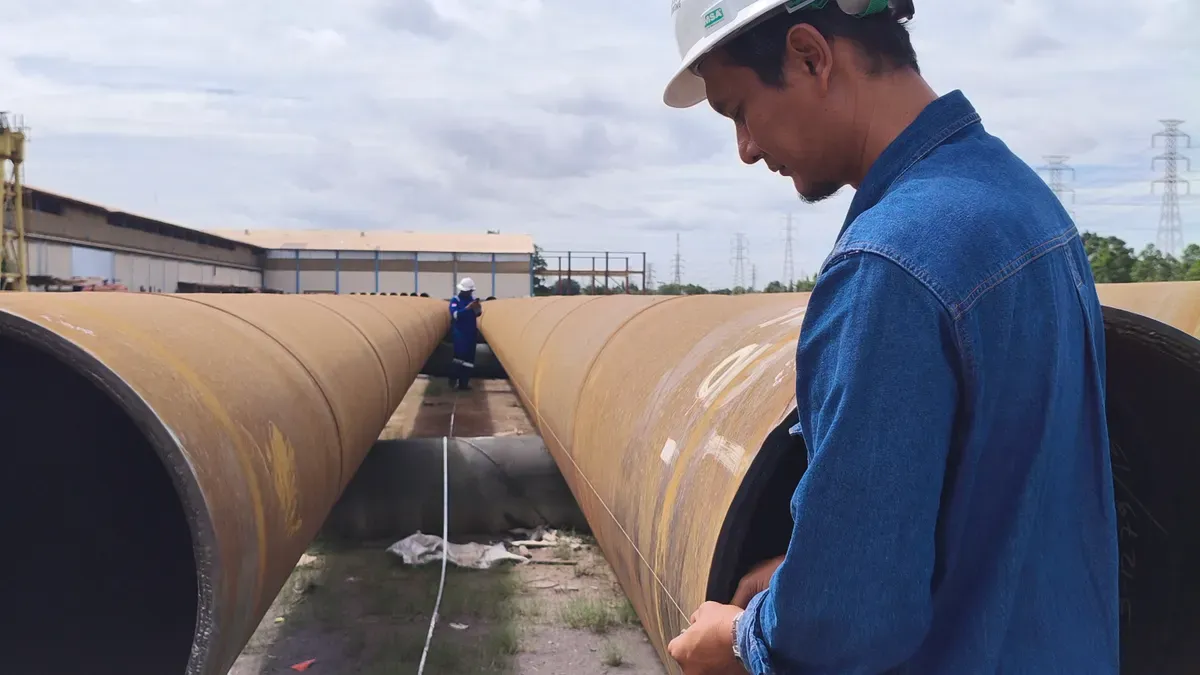
NDT, Hydrotesting, and MTC Verification
Factory checks protect your line from costly field leaks and sudden breaks. Pipe mills use sound waves or magnetic tools for non-destructive testing (NDT). These tests locate internal steel cracks, surface seams, and hidden weld flaws. Workers also run high-pressure water tests on every single pipe. This water check holds high pressure inside the steel body. The pressure test proves metal wall strength before final shipping.
You must check full Mill Test Certificates (MTC) before accepting pipe shipments. The mill quality team writes this paper to show chemical and physical strength match rules.
PSL1 requires factory test certificate (EN 10204 Type 3.1); PSL2 requires Type 3.1 or more commonly Type 3.2.
You check heat numbers, carbon levels, yield limits, and pressure test logs on these official papers. Clear test records ensure complete mill tracking for all your line pipes.
Procuring API-5L Grade B Line Pipes
Sending a detailed Request for Quotation (RFQ) prevents costly order mistakes and long shipping delays. You must list clear job details so suppliers can quote correct pipe prices fast.
API 5L Grade
PSL Level
Outside Diameter (OD)
Wall Thickness (WT)
Pipe Length
Manufacturing Method
Pipe Ends
Coating Requirement
Quantity
Testing Requirements
Third-Party Inspection Requirement
Required Documents (such as EN 10204 3.1 MTC)
Sharing these exact details helps you get accurate, clear mill quotes without constant email replies.
YUAN STEEL PIPE simplifies global line pipe purchasing for your energy projects. The firm brings 20 years of export skill to help global dealers and project buyers directly. Skilled shipping teams manage international delivery risks, custom forms, and ocean transport safety. You get fully certified api-5l grade b carbon steel pipes right on time. Partnering with a trusted global stockist keeps your pipeline building project moving forward smoothly.
Buying the right pipeline materials takes a few easy steps. You must check the specification level, pick between seamless or welded pipes, and review the full quality testing papers. Working with YUAN STEEL PIPE gives your building project a big advantage. You get low factory prices, fast shipping speeds, and fully certified materials for every single order.
YUAN STEEL PIPE keeps more than 15,000 tons of ready supply every month to match your exact work schedule. You can prevent ordering mistakes and project delays by using expert technical help. Contact YUAN STEEL PIPE today to get your official api-5l grade b price quote and helpful technical support.
FAQ
Can you use API 5L Grade B pipe in place of ASTM A106 Grade B?
API 5L Grade B can replace ASTM A106 Grade B if heat levels stay below 260°C (500°F). ASTM A106 Grade B works inside hot processing plants up to 425°C (800°F). Always check dual-certification notes on your Mill Test Certificate before swapping any pipes.
What is the primary difference between PSL1 and PSL2 specifications?
PSL2 sets strict safety rules that PSL1 does not require. PSL2 mandates mandatory Charpy V-Notch impact testing at 0°C, tight carbon caps, and upper yield limits. These extra rules guarantee strong metal strength inside freezing sites and tough job conditions.
When should you order sour service qualified line pipes?
Order sour service line pipes when your system carries fluids with dangerous hydrogen sulfide gas. Sour service approval demands full compliance with NACE MR0175/ISO 15156 quality rules. This standard caps sulfur at 0.015% and keeps metal hardness under 22 HRC.
How do 3LPE and FBE coatings protect underground steel pipelines?
Factory coatings block wet soil and dangerous chemicals from touching plain steel pipes. Fusion Bonded Epoxy provides chemical protection with a service life of 15 to 25 years. Three-Layer Polyethylene adds extra outer shielding, stretching pipe life to 30 through 50 years.
Please Contact Us!
Recent News
1.What is the difference between API 5L GR B and X52?
2026-02-062.API 5L Grade B vs. ASTM A53 Grade B: The Ultimate Guide to Choosing the Right Steel Pipe
2026-02-043.API 5L Line Pipe Guide: Specifications, Grades, and Industrial Applications Explained
2026-01-304.A53 vs A106 Steel Pipes: Which Grade Fits Your Needs
2026-01-285.What Is the Difference Between ASTM A106 Grade B and Grade C?
2026-01-156.What's the meaning of API 5L for line pipe?
2025-12-177.Everything You Need to Know About Galvanized Pipe
2025-12-10


