


What is API 5L B Pipe? The Ultimate Guide for Oil & Gas Projects
Introduction
In the global oil, gas, and petrochemical industries, API 5L B pipe stands as the most widely adopted carbon steel line pipe for low-to-medium pressure fluid transportation. As the base grade of the API 5L standard, it balances reliability, cost-effectiveness, and versatility—making it the top choice for gathering lines, distribution networks, and industrial piping systems. If you’re a procurement manager, engineer, or project owner selecting pipeline materials, understanding API 5L B pipe is critical to ensuring project safety, efficiency, and budget compliance.
At yuan steel pipe, we offer high-quality API 5L B pipe that meets strict API standards and customer requirements. This comprehensive guide answers all your questions about API 5L B pipe—from its definition, specifications, and manufacturing processes to applications, advantages, and grade comparisons. By the end, you’ll have a clear understanding of why API 5L B pipe is the backbone of modern pipeline infrastructure and how to select the right API 5L B pipe for your project.
1. What is API 5L B Pipe? Definition & Standard Background
1.1 Core Definition
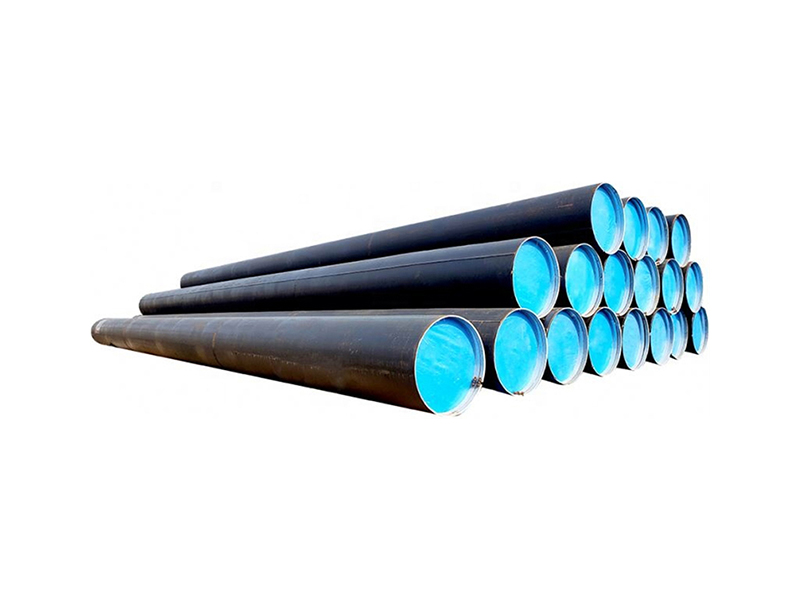
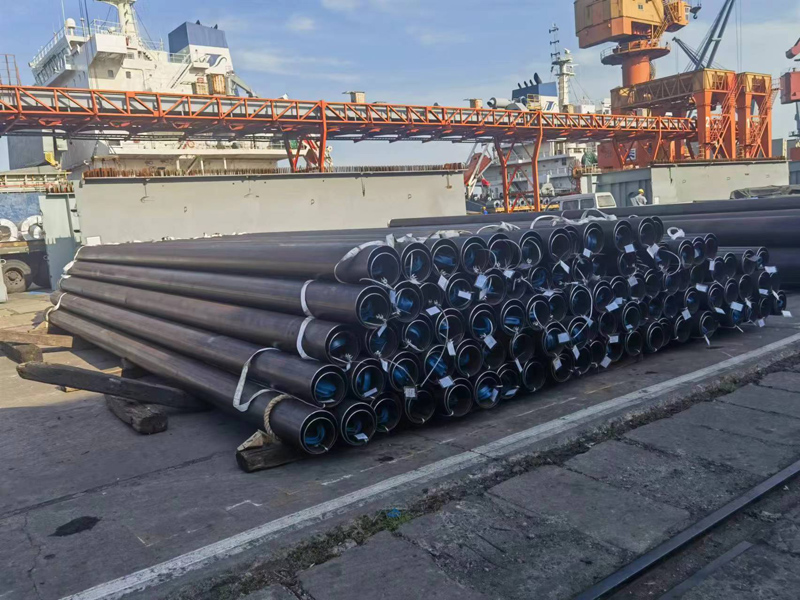
API 5L B pipe is a carbon steel line pipe manufactured in compliance with API Specification 5L—the global industry standard for pipeline transportation systems in the petroleum and natural gas sectors. It is classified as Grade B, the base grade in the API 5L grading system (which also includes higher-strength grades like X42, X52, X60, X70, and X80). The “B” in Grade B signifies its role as an economical, standardized grade with consistent mechanical and chemical properties.
In international standards, API 5L B pipe is equivalent to ISO 3183 L245 pipe, named after its minimum yield strength of 245 MPa (35,500 psi). It is designed for transporting oil, natural gas, water, and other non-corrosive fluids in low-to-medium pressure pipeline systems.
1.2 API 5L Standard Overview
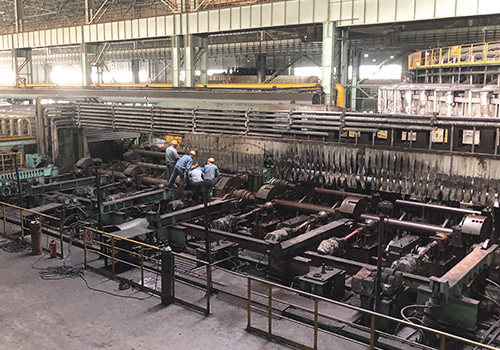
The American Petroleum Institute (API) developed API 5L to ensure uniformity, safety, and reliability in pipeline manufacturing. The standard covers material chemical composition, mechanical properties (yield strength, tensile strength, elongation), manufacturing processes (seamless, ERW, LSAW, SSAW), testing requirements (hydrostatic, ultrasonic, X-ray), dimensions, tolerances, and marking.
API 5L B pipe is the most common grade under API 5L, accounting for over 60% of global line pipe shipments for low-pressure applications.
1.3 PSL 1 vs. PSL 2: Key Classification
API 5L B pipe is divided into two Product Specification Levels (PSL) that define different quality and testing requirements:
PSL 1: The standard level with basic chemical and mechanical limits. It is cost-effective and suitable for general-purpose pipelines (e.g., municipal gas/water lines).
PSL 2: A stricter level with tighter chemical controls (lower C, P, S), mandatory Charpy V-notch impact tests, and enhanced toughness. It is used for critical applications (e.g., cold-region pipelines, sour gas service).
2. Core Specifications of API 5L B Pipe
2.1 Chemical Composition
The chemical makeup of API 5L B pipe is strictly controlled to ensure weldability, strength, and durability. Below are the maximum allowable percentages for key elements (per API 5L):
Carbon (C): 0.26% (PSL 1) / 0.22% (PSL 2) | Manganese (Mn): 1.10% | Phosphorus (P): 0.020% (PSL 1) / 0.015% (PSL 2) | Sulfur (S): 0.010% (PSL 1) / 0.005% (PSL 2) | Carbon Equivalent (CE): 0.42%–0.43%.
API 5L B pipe uses plain carbon steel (no expensive micro-alloying elements like niobium, vanadium, or titanium), making it cost-effective.
2.2 Mechanical Properties
Mechanical properties determine API 5L B pipe’s ability to withstand pressure, tension, and external stress. Key requirements include minimum yield strength of 245 MPa (35,500 psi), minimum tensile strength of 415 MPa (60,200 psi), and elongation ≥23%.
API 5L B pipe provides reliable 35 ksi minimum yield strength—sufficient for low-to-medium pressure applications (≤10 MPa operating pressure).
2.3 Dimensions & Manufacturing Types
API 5L B pipe is available in a wide range of sizes and manufacturing processes:
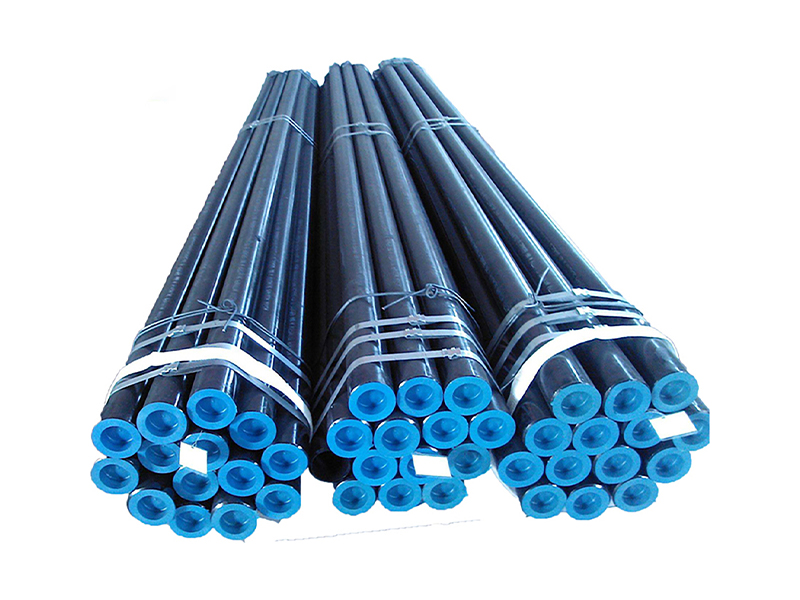
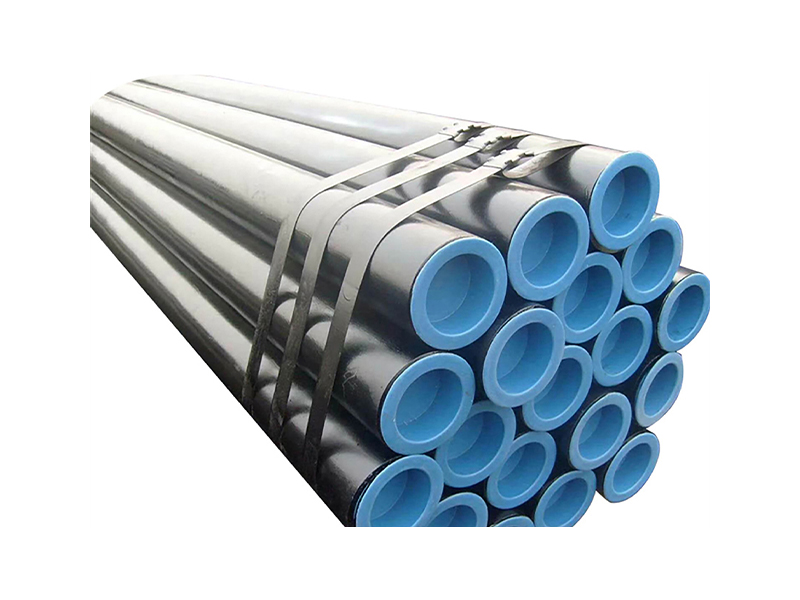
Seamless (SMLS): 1/2” to 24” OD for high-pressure applications
Electric Resistance Welded (ERW): cost-effective for medium-pressure use
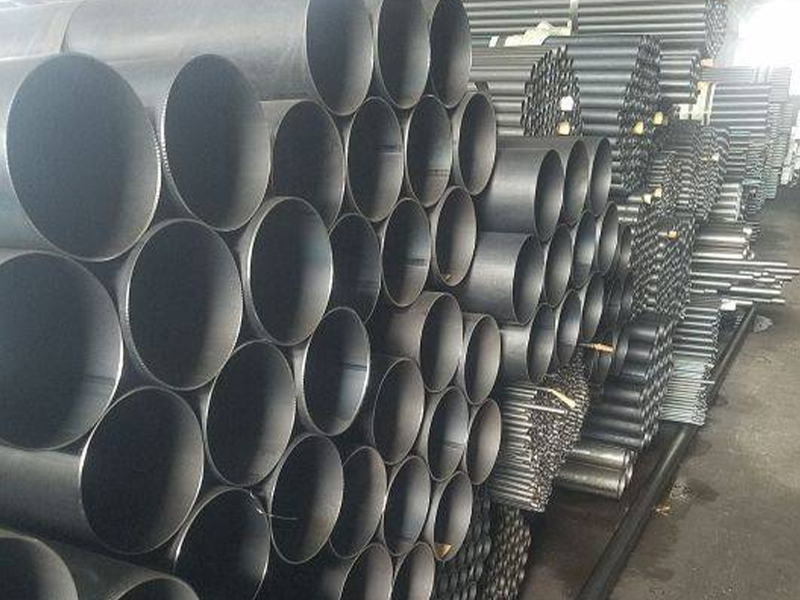
Longitudinal Submerged Arc Welded (LSAW): large-diameter heavy-wall pipes
Spiral Submerged Arc Welded (SSAW/HSAW): ultra-large diameter pipelines
At yuan steel pipe, we manufacture API 5L B pipe in all four processes with strict quality control.
3. Primary Applications of API 5L B Pipe
API 5L B pipe’s balanced performance and cost-effectiveness make it suitable for a wide range of low-to-medium pressure applications across industries.
3.1 Oil & Gas Gathering & Distribution
Onshore oil/gas gathering lines, municipal gas distribution networks, and gas plant utility lines all rely on API 5L B pipe for safe and stable fluid transportation.
3.2 Water & Wastewater Systems
Potable water transmission pipelines, wastewater treatment systems, and desalination plant piping commonly use API 5L B pipe due to its durability and easy installation.
3.3 Petrochemical & Refinery Piping
Refinery utility lines and petrochemical plant infrastructure use API 5L B pipe for non-corrosive fluid transport in low-pressure environments.
3.4 Structural & General Engineering
API 5L B pipe is also used for pipeline casing, low-pressure industrial piping, construction piling, and structural supports in various engineering projects.
4. Key Advantages of API 5L B Pipe
4.1 Unmatched Cost-Effectiveness
API 5L B pipe has a simple chemical composition and manufacturing process, making it 30–50% cheaper than higher-strength grades like X52 or X70.
4.2 Excellent Weldability
With low carbon and sulfur content, API 5L B pipe can be easily welded using standard methods without complex preheating or post-weld heat treatment.
4.3 Wide Availability & Versatility
As the most common API 5L grade, API 5L B pipe is readily available worldwide in all standard sizes and types, supporting diverse project needs.
4.4 Reliable Low-to-Medium Pressure Performance
API 5L B pipe delivers stable structural integrity for low-to-medium pressure systems and meets global safety standards for general pipeline projects.
4.5 Easy Machining & Forming
API 5L B pipe can be cut, bent, and machined on-site, reducing installation difficulty and labor costs for complex projects.
5. API 5L B Pipe vs. Higher API 5L Grades (X42, X52, X70)
API 5L B Pipe offers the lowest cost and best weldability among API 5L line pipes, making it ideal for low-pressure applications. Higher grades such as X42, X52, and X70 provide greater strength but at a higher cost and with reduced weldability.
Choose API 5L B Pipe for low-pressure, short-distance, or budget projects. Choose X42/X52 for medium-pressure transmission, and X70+ for high-pressure long-distance pipelines.
6. How to Source High-Quality API 5L B Pipe from yuan steel pipe
6.1 Quality Assurance
At yuan steel pipe, every API 5L B pipe undergoes raw material inspection, in-process monitoring, and final testing including hydrostatic and ultrasonic testing to meet API standards.
6.2 Customization Options
We provide customized sizes, PSL levels, anti-corrosion coatings, and lengths to match your project requirements.
6.3 Global Delivery & Support
yuan steel pipe offers reliable global shipping, complete certification documents, and professional technical support for API 5L B pipe selection and installation.
7. Common Misconceptions About API 5L B Pipe
Misconception 1: API 5L B pipe is low-quality and unsafe. Fact: It meets strict API standards and is safe for its designed applications.
Misconception 2: Higher grades are always better. Fact: Over-engineering increases cost unnecessarily; API 5L B is the most practical choice for low-pressure systems.
Misconception 3: PSL 2 is always necessary. Fact: PSL 1 is sufficient for 90% of general projects.
Misconception 4: API 5L B pipe cannot be used outdoors. Fact: With proper coatings, it performs well outdoors and underground for 20–30 years.
8. Conclusion
API 5L B pipe is a reliable, cost-effective, and versatile carbon steel line pipe designed for low-to-medium pressure fluid transport. It remains the most popular grade in the API 5L specification for oil, gas, water, and industrial applications worldwide.
At yuan steel pipe, we are committed to manufacturing high-quality API 5L B pipe that meets global standards and customer expectations. Whether you need API 5L B pipe for a small municipal gas project or a large water transmission network, we have the expertise, capacity, and quality control to deliver the perfect solution.
When sourcing API 5L B pipe, always verify API 5L certification and specify the correct PSL level, size, wall thickness, and manufacturing type. Partnering with a reputable supplier like yuan steel pipe ensures long-term performance and project success.
Please Contact Us!


Recent News
1.Tips for sourcing reliable API 5L Grade B pipe suppliers in 2026
2026-04-302.Top Applications for API 5L X70 PSL2 Line Pipe in Oil and Gas
2026-04-213.Top 10 API 5L Grade B Pipe Suppliers in China
2026-04-204.6 Key Properties of API 5L X70 Pipe Material
2026-04-035.What is API 5L Grade B Pipe
2026-02-096.TOP 10 API 5L Line Pipe Suppliers in China 2026
2026-02-137.API 5L X70 Technical Guide: Composition, Properties, and Welding Insights
2026-03-038.Understanding API 5L Pipe Specifications : The 2026 Guide for Industry Professionals
2026-02-26


