


API 5L X70 Technical Guide: Composition, Properties, and Welding Insights
API 5L X70 Pipe Technical Specification Deep Dive
For project managers, pipeline engineers, and procurement specialists, selecting the right line pipe is a critical decision that impacts safety, longevity, and project economics. When specifications call for high strength combined with excellent toughness, API 5L X70 pipe (also designated L485) has become the global workhorse for long-distance, high-pressure oil and gas transmission.
At Yuan Steel Pipe, we understand that behind every inquiry for API 5L X70 PSL2 line pipe is a need for reliable, verifiable data. This article provides a technical deep dive into the API 5L X70 pipe specification—its controlled chemistry, mechanical targets, and crucial welding considerations—to help you make an informed sourcing decision.
Part 1: The Metallurgical Makeup of API 5L X70 Pipe
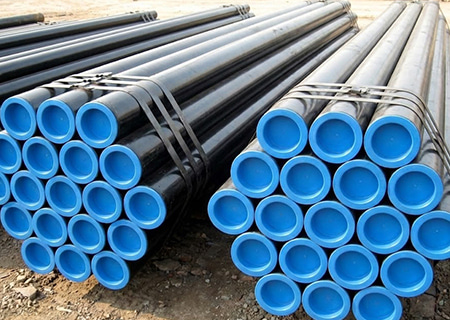
The superior performance of API 5L X70 pipe is not accidental; it is engineered through a precise micro-alloying process and advanced thermomechanical control processing (TMCP). Unlike lower-grade steels that rely primarily on increased carbon for strength, X70 achieves its high strength and low-temperature toughness through grain refinement and precipitation hardening.
Chemical Composition (Key to Weldability and Toughness)
The API 5L specification strictly limits the chemistry of X70 steel to ensure it meets performance targets, especially for PSL2 grades which are mandatory for sour service (H₂S environments). Below is a typical breakdown based on API 5L PSL2 requirements for seamless and welded pipe, consistent with the standards we adhere to at Yuan Steel Pipe:
| Element | Mass Fraction (max %) - PSL2 | Role in the Steel |
|---|---|---|
| Carbon (C) | 0.12% - 0.18% (Lower for weldable grades) | Low carbon content is the single most important factor for excellent weldability and resistance to hydrogen-induced cracking (HIC). |
| Manganese (Mn) | 1.70% (max) | Acts as a solid solution strengthener and helps control the microstructure during cooling. |
| Phosphorus (P) | 0.025% (max) | Strictly controlled as a harmful element that reduces toughness and promotes cracking. |
| Sulfur (S) | 0.015% (max) | Kept to an absolute minimum to improve ductility, impact toughness, and resistance to HIC. |
| Micro-alloys (Nb, V, Ti) | < 0.15% total | These form fine precipitates (carbides/nitrides) that refine the grain structure, boosting strength and toughness simultaneously. |
As shown in the data on our product page for API 5L X70 PSL2 Line Pipe, the X70M (thermomechanically rolled) grade offers an even lower maximum carbon content of 0.12%, further enhancing its field weldability—a critical advantage for large-scale pipeline projects.
Part 2: Mechanical Properties – The Numbers That Matter
For an engineer, the grade X70 is defined by its specific mechanical property window. Sourcing API 5L X70 pipe from a reliable supplier like Yuan Steel Pipe guarantees that these values are met consistently, as verified by the Mill Test Certificate (MTC) (EN 10204 3.1 or 3.2).
Yield Strength (Rt0.5): Minimum 485 MPa (70,300 psi), Maximum 635 MPa (92,100 psi). This is the stress at which the pipe begins to deform plastically. The tight upper limit ensures the pipe isn't too brittle.
Tensile Strength (Rm): Minimum 570 MPa (82,700 psi), Maximum 760 MPa (110,200 psi). This indicates the maximum stress the pipe can withstand before fracturing.
Yield-to-Tensile Ratio: An important factor for design, ensuring the pipe has a sufficient safety margin between yield and ultimate failure.
Toughness (Charpy V-Notch Impact Test): This is where PSL2 API 5L X70 pipe truly excels. It is tested at low temperatures (e.g., -10°C, -20°C, or even -45°C as per project specs) to guarantee ductile behavior and prevent brittle fracture. A typical requirement might be an average of 40J or more. This is essential for arctic or offshore applications, as highlighted in the Product Application section of our website.
Part 3: Welding Considerations for X70 Pipe
The low carbon and micro-alloyed design of API 5L X70 pipe makes it readily weldable using standard techniques (SMAW, GTAW, SAW), but adhering to a qualified Welding Procedure Specification (WPS) is critical to maintain joint integrity.
Controlled Heat Input: The heat input during welding must be carefully controlled. Too low, and the rapid cooling can create hard, untempered martensite in the Heat Affected Zone (HAZ), leading to hydrogen cracking. Too high, and the fine-grained structure can coarsen, reducing toughness.
Low Hydrogen Practices: Using low-hydrogen electrodes (e.g., AWS E8010 or E9010 for cellulosic, or E8018 for low-hydrogen applications) is mandatory. Proper storage and handling of electrodes are non-negotiable to prevent hydrogen embrittlement.
Preheat and Interpass Temperature: The need for preheat depends on the carbon equivalent (CEV) and wall thickness. For typical X70 with a low CEV (<0.43), preheat may be minimal for thin walls but required for thicker sections to slow the cooling rate and allow hydrogen to diffuse out.
HAZ Toughness: The goal of a qualified WPS is to preserve the toughness of the base metal in the HAZ. The fine-grained structure of X70 can be damaged by excessive heat, so maintaining the specified interpass temperature is key.
Why Partner with Yuan Steel Pipe for Your X70 Requirements?
Understanding the technical nuances of API 5L X70 pipe is our specialty. When you choose Yuan Steel Pipe, you are not just buying steel; you are securing a partnership with a team that ensures your project's success through:
Technical Integrity: We supply API 5L X70 PSL2 line pipe that strictly meets the chemical and mechanical properties outlined above, complete with full traceability.
Sourcing Flexibility: As detailed on our API 5L Pipe page, we offer X70 in seamless (for high-pressure integrity and smaller diameters) and welded (ERW/LSAW) (for large-diameter, cost-effective transmission lines). Both are available in PSL1 and the more demanding PSL2 specifications.
Proven Supply Chain: With over 15,000 tons in stock and monthly sales exceeding 30,000 tons, we have the capacity and logistics expertise, including end-to-end logistics control and clear documentation, to deliver your materials on schedule, anywhere in the world.
Guaranteed Support: Our commitment extends beyond delivery. Our team provides guaranteed after-sales support and professional technical support to address any post-sales inquiries.
Conclusion: Build with Confidence
The API 5L X70 pipe is a sophisticated engineering material. Its successful application in demanding environments hinges on sourcing from a supplier who understands its metallurgy, guarantees its properties, and provides the necessary technical backing. From the controlled chemistry to the final Charpy test, every aspect of our API 5L X70 PSL2 line pipe is managed to give you confidence in your pipeline's long-term integrity.
Ready to discuss your project's specific requirements? Contact the experts at Yuan Steel Pipe today for a custom quote and technical consultation. Let's work together to ensure your project's success.
Please Contact Us!


Recent News
1.Why ASTM A53 Galvanized Pipe is the Gold Standard for Modern Plumbing & HVAC
2025-11-032.What's the meaning of API 5L for line pipe?
2025-12-173.What Is the Difference Between ASTM A106 Grade B and Grade C?
2026-01-154.A53 vs A106 Steel Pipes: Which Grade Fits Your Needs
2026-01-285.API 5L Line Pipe Guide: Specifications, Grades, and Industrial Applications Explained
2026-01-306.API 5L Grade B vs. ASTM A53 Grade B: The Ultimate Guide to Choosing the Right Steel Pipe
2026-02-047.What is the difference between API 5L GR B and X52?
2026-02-068.TOP 10 API 5L Line Pipe Suppliers in China 2026
2026-02-139.What is API 5L Grade B Pipe
2026-02-0910.Understanding API 5L Pipe Specifications : The 2026 Guide for Industry Professionals
2026-02-26


