


Understanding API 5L Pipe Specifications : The 2026 Guide for Industry Professionals
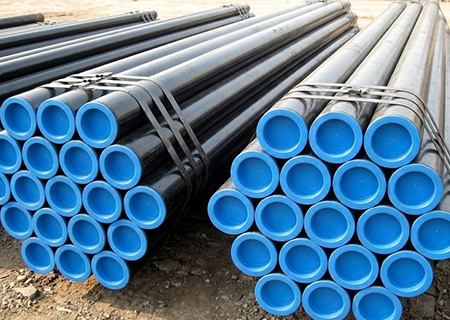
In the high-stakes world of energy and infrastructure, the pipeline is the lifeline. Whether transporting crude oil across continents or distributing natural gas through urban networks, the integrity of this lifeline is non-negotiable. This is where the API 5L Pipe becomes the industry's gold standard. Governed by the American Petroleum Institute (API), this specification governs the manufacture of seamless and welded API 5L Line Pipe used in petroleum, natural gas, and water pipeline systems.
For procurement managers and project engineers, navigating the nuances of API 5L Pipe Specification—from PSL1 vs. PSL2 to the differences between X42 and X70—is critical. A wrong choice can lead to project delays, safety hazards, or costly failures. This comprehensive guide is designed to cut through the technical jargon, providing you with a clear, practical understanding of API 5L Steel Pipe. We will explore everything from manufacturing processes and mechanical properties to testing protocols, empowering you to make informed decisions for your next project with confidence.
Key Takeaways
API 5L is the benchmark: It defines the standard for line pipes, ensuring safety and reliability in oil, gas, and water transmission.
PSL2 offers superior performance: For critical applications involving high pressure, low temperatures, or sour gas, PSL2 provides stricter chemical controls and mandatory impact testing.
Seamless vs. Welded matters: Your choice between seamless and ERW (Electric Resistance Welded) pipe impacts cost, strength, and application suitability.
Grade dictates strength: The "X" grade (e.g., X52, X60, X70) directly correlates to the pipe's minimum yield strength, essential for handling different pressure requirements.
Sourcing requires a strategic partner: A reliable supplier like Yuan Steel Pipe ensures not just material compliance, but also on-time delivery, accurate documentation, and long-term project support.
Chapter 1: Demystifying the API 5L Pipe Specification
The API 5L Pipe Specification is more than just a standard; it's a contract of performance between the manufacturer and the end-user. It outlines the technical delivery conditions for two product specification levels (PSL1 and PSL2) and covers various grades of steel.
1.1 What is API 5L?
Formally known as ISO 3183, the API 5L specification is the most widely used standard for line pipes. It ensures that API 5L Steel Pipe produced anywhere in the world meets a consistent set of requirements for:
Chemical Composition: Limits on elements like Carbon, Manganese, Phosphorus, and Sulfur to ensure weldability and mechanical properties.
Mechanical Properties: Defined values for tensile strength, yield strength, and elongation.
Testing: Procedures for hydrostatic, dimensional, and non-destructive inspections.
1.2 PSL1 vs. PSL2: Choosing the Right Quality Level
This is one of the most critical decisions in the selection process. The choice between PSL1 and PSL2 depends on the service conditions.
| Feature | PSL1 (Product Specification Level 1) | PSL2 (Product Specification Level 2) |
|---|---|---|
| Primary Use | Standard pipeline applications with moderate pressures and temperatures. | Demanding environments: high pressure, offshore, sour service, and low temperatures. |
| Chemical Composition | Basic limits. Carbon equivalent (CE) is not a mandatory requirement. | Stricter limits. Maximum Carbon Equivalent (CE) is mandatory to improve weldability and toughness. |
| Mechanical Properties | Specifies minimum yield and tensile strength only. | Specifies both minimum and maximum yield/tensile strength to prevent over-matching in fittings. |
| Toughness Testing | Not required. | Mandatory Charpy V-Notch (CVN) impact testing for most grades to guarantee fracture resistance. |
| Nondestructive Inspection (NDI) | Standard requirements. | More rigorous NDI is often required to ensure no critical defects. |
Insight from Yuan Steel Pipe: As a major supplier of API 5L Line Pipe, we maintain extensive stock of both PSL1 and PSL2 grades. We often advise clients that while PSL1 is cost-effective for above-ground gathering lines, the enhanced safety margins of PSL2 are invaluable for long-term asset integrity in high-stakes transmission projects.
Need Help Selecting the Right API 5L Pipe?
Not sure which API 5L grade, PSL level, or pipe manufacturing type fits your project? Share your required specifications and application with Yuan Steel Pipe to discuss suitable supply options.
Explore API 5L Pipe OptionsChapter 2: Manufacturing Methods: Seamless vs. Welded API 5L Steel Pipe
Understanding how a pipe is made directly influences its application. The API 5L Pipe Specification covers both seamless and welded processes.
2.1 API 5L Seamless Pipe (SMLS)
Process: Manufactured by heating a solid steel billet and then piercing it to create a hollow tube. This tube is then rolled and stretched to achieve the desired dimensions.
Advantages: No weld seam means uniform structure and superior strength, making it ideal for high-pressure, high-temperature, and critical applications like offshore risers and refinery piping.
Availability: At Yuan Steel Pipe, we supply API 5L seamless pipe in grades from B to X80, suitable for the most demanding environments.
2.2 API 5L Welded Pipe
API 5L ERW Pipe (Electric Resistance Welded): Formed from steel coils and welded longitudinally using high-frequency electric current. ERW pipe offers excellent dimensional accuracy and cost-efficiency, making it a popular choice for long-distance onshore pipelines and urban gas networks. Our API 5L ERW pipe is available in PSL2 specifications, complete with the necessary heat treatment to ensure a reliable weld seam.
API 5L LSAW/SSAW Pipe (Submerged Arc Welded): Used for larger diameters (typically > 24 inches), these pipes are formed from steel plates. LSAW (Longitudinal) and SSAW (Spiral) pipes are the backbone of major cross-country oil and gas transmission lines.
Chapter 3: Decoding API 5L Grades: From Grade B to X80
The grade designation, such as X42, X52, or X70, refers to the pipe's minimum yield strength in kilopounds per square inch (ksi). For example, X52 has a minimum yield strength of 52,000 psi (approx. 360 MPa). Choosing the right grade is a balance between strength requirements and project cost.
Typical Applications of Common API 5L Grades:
| Grade | Minimum Yield Strength (psi) | Typical Applications |
|---|---|---|
| Grade B | 35,000 | Low-pressure fluids, structural applications, and water lines. |
| X42 | 42,000 | Standard oil and gas gathering lines. |
| X52 | 52,000 | The most versatile and widely used grade for medium-pressure transmission. API 5L X52 offers an excellent balance of strength and weldability. |
| X60 | 60,000 | High-pressure transmission lines. API 5L X60 is a common choice for natural gas pipelines. |
| X65 | 65,000 | Long-distance, high-pressure pipelines requiring higher strength-to-weight ratios. |
| X70 | 70,000 | Major cross-country and offshore projects where high strength and low weight are critical. Our API 5L X70 PSL2 line pipe is engineered for these large-scale projects. |
Chapter 4: Critical Testing for API 5L Line Pipe
Quality assurance is paramount. The API 5L Pipe Specification mandates several tests to validate pipe integrity. As a trusted supplier, Yuan Steel Pipe ensures every product meets these rigorous standards.
Hydrostatic Testing: Every length of API 5L Steel Pipe is pressure-tested to ensure it can withstand the specified internal pressure without leakage.
Mechanical Testing: Tensile tests confirm the steel's yield and tensile strength. Bend and flattening tests (for welded pipe) verify the soundness of the weld.
Non-Destructive Testing (NDT): For PSL2 and critical lines, NDT methods like ultrasonic testing are used to scan the pipe body and weld seam for any internal or surface flaws.
Sour Service Testing: For environments with hydrogen sulfide (H2S), pipes must pass additional tests like HIC (Hydrogen Induced Cracking) and SSC (Sulfide Stress Cracking) as per API 5L Annex H.
Conclusion
Selecting the correct API 5L Steel Pipe is a complex but manageable task when armed with the right knowledge. By understanding the nuances of API 5L Pipe Specification, from PSL levels and manufacturing types to grades and testing, you can ensure the safety, efficiency, and longevity of your pipeline projects.
Partnering with a supplier who not only provides the material but also the technical expertise is key to navigating this process smoothly. With a strong stock of over 15,000 tons monthly, stringent quality control, and a team dedicated to global logistics and after-sales support, Yuan Steel Pipe stands ready to be that partner. We ensure that your API 5L Line Pipe requirements are met with precision, from the mill to your project site.
Looking for an API 5L Line Pipe Supplier?
Send Yuan Steel Pipe your required grade, PSL, pipe dimensions, order quantity, and destination port. Our team can review your inquiry and discuss supply availability, documentation requirements, and quotation details.
Request an API 5L Pipe QuoteFAQ
Q1: What is the main difference between API 5L and ASTM A106 pipes?
A: While both are carbon steel pipes, API 5L is specifically a "line pipe" standard for fluid transmission in pipelines, with grades like X42-X70. ASTM A106 is a "seamless carbon steel pipe" standard primarily for high-temperature services in refineries and plants. API 5L Grade B is often interchangeable with A106 Grade B for many applications.
Q2: How can I get the most accurate API 5L Line Pipe price list?
A: Steel prices fluctuate daily based on raw material costs. For the most current pricing, it's best to contact a supplier directly with your specific project details. At Yuan Steel Pipe, we provide competitive API 5L Line Pipe prices tailored to your required quantity, grade, size, and destination, typically within 24 hours.
Q3: When should I choose API 5L ERW pipe over seamless pipe?
A: Choose API 5L ERW pipe for a cost-effective solution, especially for larger diameters (up to 24") and standard pressure applications like gas distribution networks. Choose seamless pipe for critical high-pressure, high-temperature, or sour service applications where the absence of a weld seam is a non-negotiable safety requirement.
Q4: Does your API 5L ERW pipe meet PSL2 requirements?
A: Yes, absolutely. At Yuan Steel Pipe, ourAPI 5L ERW pipe can be supplied to meet both PSL1 and PSL2 specifications. For PSL2, we ensure the chemical composition is tightly controlled and that the weld seam undergoes rigorous non-destructive testing and heat treatment to guarantee performance.
Q5: What does the "X" in X52, X60, and X70 stand for?
A: The "X" designates the pipe as meeting API 5L pipes specifications for high-strength line pipe. The number following the "X" indicates the minimum yield strength in thousands of pounds per square inch (ksi). For example, API 5L X60 has a minimum yield strength of 60,000 psi.
Please Contact Us!


Recent News
1.What's the meaning of API 5L for line pipe?
2025-12-172.What is the difference between API 5L GR B and X52?
2026-02-063.API 5L Grade B vs. ASTM A53 Grade B: The Ultimate Guide to Choosing the Right Steel Pipe
2026-02-044.API 5L Line Pipe Guide: Specifications, Grades, and Industrial Applications Explained
2026-01-305.What is API 5L Grade B Pipe
2026-02-096.TOP 10 API 5L Line Pipe Suppliers in China 2026
2026-02-13


