


What is the difference between API 5L GR B and X52?
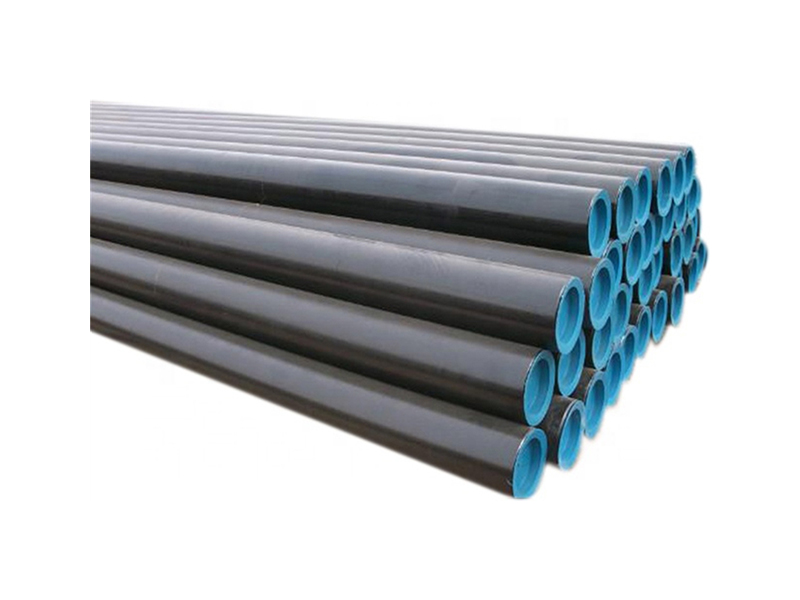
Choosing the right grade of line pipe is a critical decision for any oil, gas, or water transportation project. Two of the most common specifications encountered are API 5L Grade B and API 5L X52. While they may look similar on a spec sheet, their differences in yield strength, chemical composition, and application can significantly impact your project's budget and safety.
In this comprehensive guide, we will break down the technical barriers and explain exactly how these two pipes differ, helping you make an informed procurement decision.
Key Takeaways: API 5L Grade B vs. X52
Yield Strength: X52 has a higher minimum yield strength (52,200 psi) compared to
Grade B (35,500 psi).Pressure Rating: Due to its strength, X52 can handle higher internal pressures with thinner walls.
Cost-Efficiency: X52 often allows for reduced steel tonnage in long-distance pipelines.
Weldability: Both are highly weldable, but X52 requires slightly more precise carbon equivalent (CE) control.
Application: Grade B is the "utility player" for general services; X52 is the "performance choice" for high-pressure transmission.
Understanding the API 5L Specification
The American Petroleum Institute (API) established the 5L specification to provide standards for pipe suitable for use in conveying gas, water, and oil. Within this spec, "Grade B" and "X52" refer to the mechanical strength levels of the steel.
At Yuan Steel Pipe, we specialize in manufacturing high-quality line pipes that strictly adhere to these international standards, ensuring that whether you choose Grade B or X52, you receive a product built for durability.
The Core Difference: Mechanical Properties
The primary differentiator between these two grades is their Minimum Yield Strength. This is the point at which the steel begins to deform permanently.
1. API 5L Grade B: The "B" represents a standard strength level. It is reliable and widely
used for low-to-medium pressure systems.
2.API 5L X52: The "52" stands for 52, 000 psi (or approximately 360 MPa). It belongs to
the high-strength category of line pipes.
Mechanical Property Comparison Table
| Property | API 5L Grade B | API 5L X52 (L360) |
| Yield Strength (Min) | 35, 500 psi (245 MPa) | 52,200 psi(360 MPa) |
| Tensile Strength (Min) | 60, 200 psi (415 MPa) | 66, 700 psi (460 MPa) |
| Elongation | Standard (varies by wall) | Standard (varies by wall) |
Chemical Composition and Weldability
To achieve higher strength in api 5l x52 pipe, manufacturers often adjust the chemical makeup. While API 5L GR B pipe focuses on a balance of carbon and manganese for easy welding, X52 may include micro-alloying elements like Niobium (Nb) or Vanadium (V) to boost strength without increasing thickness.
Yuan Steel Pipe utilizes advanced heat treatment and controlled rolling to ensure our X52 pipes maintain excellent ductility and toughness, making them easy to weld in the field despite their higher strength.
Performance in High-Pressure Environments
Why do engineers often prefer api 5l x52 pipe for cross-country pipelines? It comes down to the Pressure-to-Weight Ratio.
Because X52 is stronger, you can use a pipe with a thinner wall thickness to handle the same internal pressure as a thicker Grade B pipe.
Weight Reduction: Using thinner X52 pipes reduces the total weight of the steel required.
Logistics: Lower weight means lower shipping costs and easier handling on-site.
Cost: While X52 steel costs slightly more per ton, the reduction in tonnage often makes the overall project cheaper.
PSL1 vs. PSL2 Requirements
Both API 5L Grade B and X52 are available in two Product Specification Levels (PSL):
PSL1: Standard quality for general applications.
PSL2: Includes mandatory requirements for fracture toughness (Charpy V-notch testing), stricter chemical limits, and mandatory traceability.
If you are working in offshore environments or sour service (H2S), we highly recommend the API 5L X52 PSL2 variant for its enhanced safety margins.
How to Choose the Right Grade for Your Project?
Choosing between API 5L GR B pipe and X52 depends on three main factors:
Design Pressure: If your system operates at high pressure over long distances, X52 is usually the superior choice.
Budget: For local distribution lines or low-pressure water transport, the cost-effectiveness of Grade B is hard to beat.
Environment: For cold climates where brittle fracture is a risk, X52 in a PSL2 grade offers better impact resistance.
At Yuan Steel Pipe, we provide technical consulting to help you match the right grade to your specific project environment. Our
FAQ API 5L Pipe
Q: Can I use X52 in place of Grade B?
A: Yes, X52 exceeds the mechanical requirements of Grade B. However, you should check if the welding procedures need adjustment due to the higher strength.
Q: Is API 5L Grade B the same as ASTM A106 Grade B?
A: They are very similar, but not identical. API 5L is designed specifically for line pipe (transportation), while ASTM A106 is for high-temperature pressure piping.
Q: Does Yuan Steel Pipe provide testing certificates?
A: Absolutely. All our products, including api 5l x52 pipe, come with Mill Test Certificates (MTC) according to EN 10204 3.1 or 3.2.
Q: Which grade is better for bending?
A: Both are suitable for induction bending. However, since Grade B has lower yield strength, it is generally slightly easier to cold-bend on-site.
Conclusion
In the debate of API 5L GR B vs. X52, there is no "better" pipe—only the "right" pipe for your specific application. Grade B offers reliable, economical performance for standard tasks, while X52 provides the high-strength efficiency needed for modern, high-pressure energy infrastructure.
As a leading manufacturer, Yuan Steel Pipe is committed to delivering precision-engineered piping solutions. Explore our full range of API 5L products at
Please Contact Us!
Recent News
1.Innovation in API 5L PSL1 Line Pipe: Efficiency Meets Reliability
2025-11-032.What's the meaning of API 5L for line pipe?
2025-12-173.API 5L Line Pipe Guide: Specifications, Grades, and Industrial Applications Explained
2026-01-304.API 5L Grade B vs. ASTM A53 Grade B: The Ultimate Guide to Choosing the Right Steel Pipe
2026-02-04


