


API 5L Pipe VS A106 Pipe Key Differences Explained
Grade Specification | Primary Application | Temperature Limitations | Key Characteristic |
|---|---|---|---|
ASTM A106 | Power plants, Refineries, Boilers | Up to 750°F (approx 400°C) | Made for high heat and high pressure |
API 5L | Oil and gas transmission lines | Varies by PSL level | Strong pipe, often checked for sour service (H2S) |
Understanding the manufacturing and application of A106 seamless pipe and API 5L Line Pipe helps you make the best choice for your project. API 5L seamless line pipe is engineered for strength and excellent pressure resistance, making it ideal for demanding oil and gas environments. On the other hand, a106b pipe is specifically designed to perform reliably under high-temperature conditions. By selecting the right API 5L pipe, a 106 pipe, API 5L line pipe, or a106b pipe, you ensure optimal performance and safety for your application.
Key Takeaways
API 5L pipe works best for moving oil and gas. A106 pipe is better for very hot places like power plants.
Pick API 5L if you need both seamless and welded pipes. A106 pipe is always seamless and made for high pressure.
Think about how hot things will get. A106 pipe can take heat up to 750°F. This makes it good for steam and hot liquids.
Choose the right grade for how strong the pipe needs to be. API 5L has many grades for different pressure levels.
Always look at your project’s needs for pressure, heat, and welding. This helps you get the best pipe for the job.
API 5L Pipe And A106 Pipe Standards
What Is API 5L Pipe
API 5L pipe is used in oil and gas projects. The American Petroleum Institute made this standard. It helps make sure pipes are safe for oil, gas, and water. API 5L pipe can be seamless or welded. Electric Resistance Welded pipes are included too. There are many grades like GR.B, X42, X46, and X70. You pick the grade based on how strong the pipe needs to be. The standard has PSL1 and PSL2 levels. PSL2 needs more tests and checks than PSL1. This makes PSL2 better for important jobs.
Yuan Steel Pipe sells api 5l line pipe. They have both seamless and welded pipes. You can pick the grade and PSL level you need. Yuan Steel Pipe lets you choose the pipe’s length, coating, and testing.
Tip: API 5L pipe is trusted around the world. It works well in oil and gas pipelines. You can use it on land or in the sea.
Standard | API 5L | ASTM A106 |
|---|---|---|
Purpose | Pipeline transportation in oil and gas | High-temperature service in power plants and refineries |
Grades | X42, X52, X70, etc. | Grade A, B, C |
Manufacturing | Seamless and welded | Seamless only |
Testing | Chemical analysis, toughness | Elevated temperature properties |
Applications | Onshore and offshore pipelines | Industrial process piping |
What Is A106 Pipe
A106 pipe is used when heat and pressure are high. ASTM A106 is the standard for seamless carbon steel pipes. These pipes are used in power plants, refineries, and boilers. There are three grades: A, B, and C. Grade B is called a106b pipe. It is the most common. It is strong and good for steam lines and process piping.
A 106 pipe is always seamless. The standard says the pipe must pass extra tests for high heat. You use a 106 pipe when welded pipes will not work.
ASTM makes the rules for a 106 pipe’s material and tests.
API makes rules for oil and gas pipes, like api 5l pipe.
You need to know these rules to pick the right pipe. If you need api 5l line pipe for oil and gas, Yuan Steel Pipe has many grades and PSL choices. For high heat, a106b pipe is the best pick.
Manufacturing Differences: Seamless Vs Welded
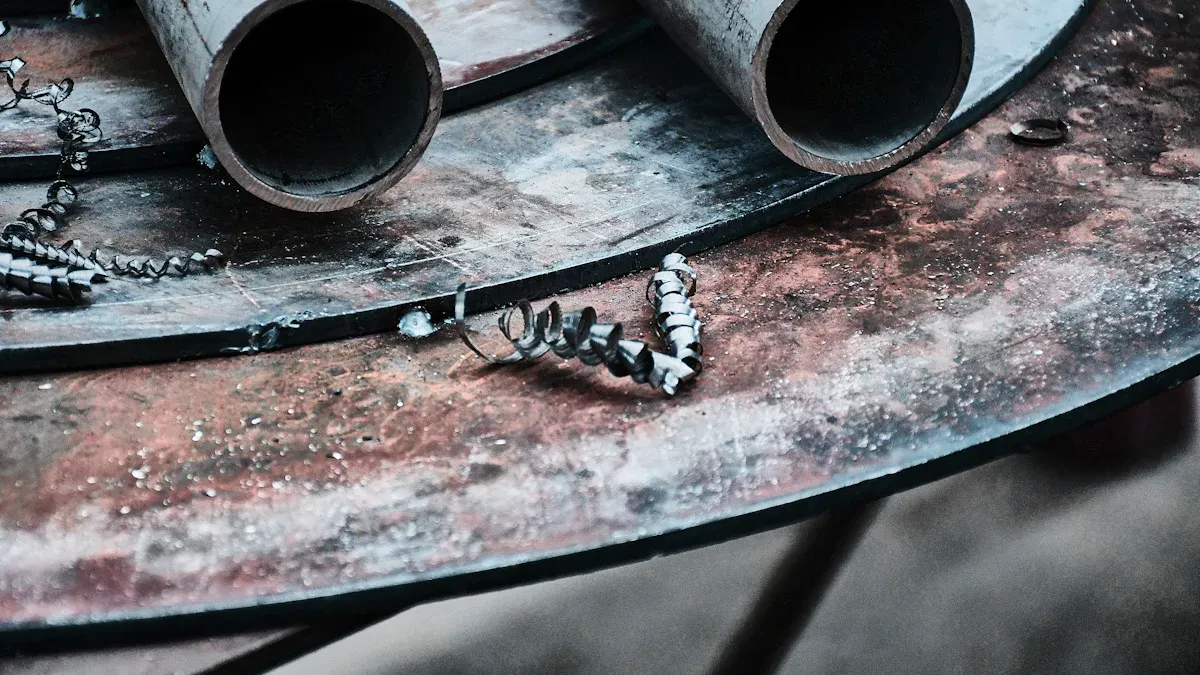
If you want to pick between api 5l pipe and a 106 pipe, you should know how each is made. How the pipe is made changes its strength, price, and where you can use it.
API 5L Line Pipe Production
Api 5l line pipe comes in seamless and welded types. Seamless pipes start as a solid piece of steel. The steel gets heated, pierced, and stretched into a tube. This way, the pipe is strong everywhere and has no weak spots. Welded pipes, like Electric Resistance Welded or Double Submerged Arc Welded, start as flat steel plates. The edges are rolled and then welded together. Welded pipes cost less and can be made in bigger sizes.
Yuan Steel Pipe sells both seamless and welded api 5l pipe. You can choose the one that works for your project. Seamless pipes are good for high-pressure jobs. Welded pipes are great for long pipelines and big sizes.
Tip: Seamless pipes do not have a weld seam, so they are better for high pressure. Welded pipes cost less and are easy to get in special sizes.
Here is a table that shows the main ways they are made:
Pipe Type | Manufacturing Process | Key Differences |
|---|---|---|
API 5L | 1. Raw Material Selection: Low-carbon or micro-alloyed steel. | 1. Allows both seamless and welded options. |
A106 Pipe Manufacturing
A 106 pipe, also called a106b pipe, is always seamless. Makers use carbon steel and follow strict ASTM rules. They heat the steel, pierce it, and roll it into a pipe shape. This makes the pipe strong everywhere with no weak spots. After shaping, the pipe gets heat treatment to make the inside better. The last steps are straightening, cutting, and cleaning the outside.
Seamless a 106 pipe is best for hot and high-pressure jobs. You see it a lot in power plants and refineries. Making seamless pipes costs more, but they work well for tough jobs.
Here is a quick table to compare seamless and welded pipes:
Type of Pipe | Advantages | Disadvantages |
|---|---|---|
Seamless Pipes | Uniform strength, no weak points, high pressure | Higher cost, limited sizes and shapes |
Welded Pipes | Cost-effective, larger sizes, simple production | Lower strength, possible weak weld seam |
When you choose between api 5l line pipe and a106b pipe, think about how much pressure, heat, and money your project needs. Yuan Steel Pipe can help you pick the best pipe for your job.
Chemical Composition Comparison
When you compare the chemical makeup of pipes, you learn why each type works best in certain jobs. The main difference between api 5l pipe and a 106 pipe comes from the amount of carbon and other elements inside the steel.
API 5L Pipe Elements
API 5L line pipe uses a mix of elements to give it strength and toughness. You often see lower carbon content in these pipes. This helps the pipe stay strong but also makes it easier to weld. API 5L can also have small amounts of alloying elements like titanium. These extra elements help the pipe handle tough conditions in oil and gas pipelines.
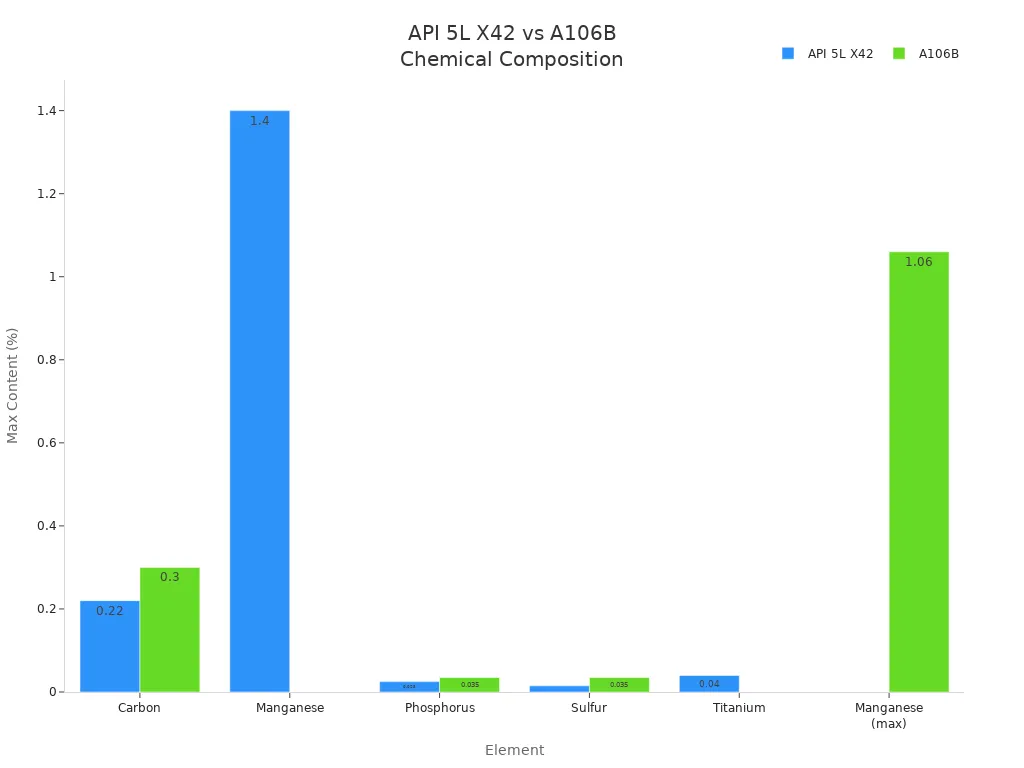
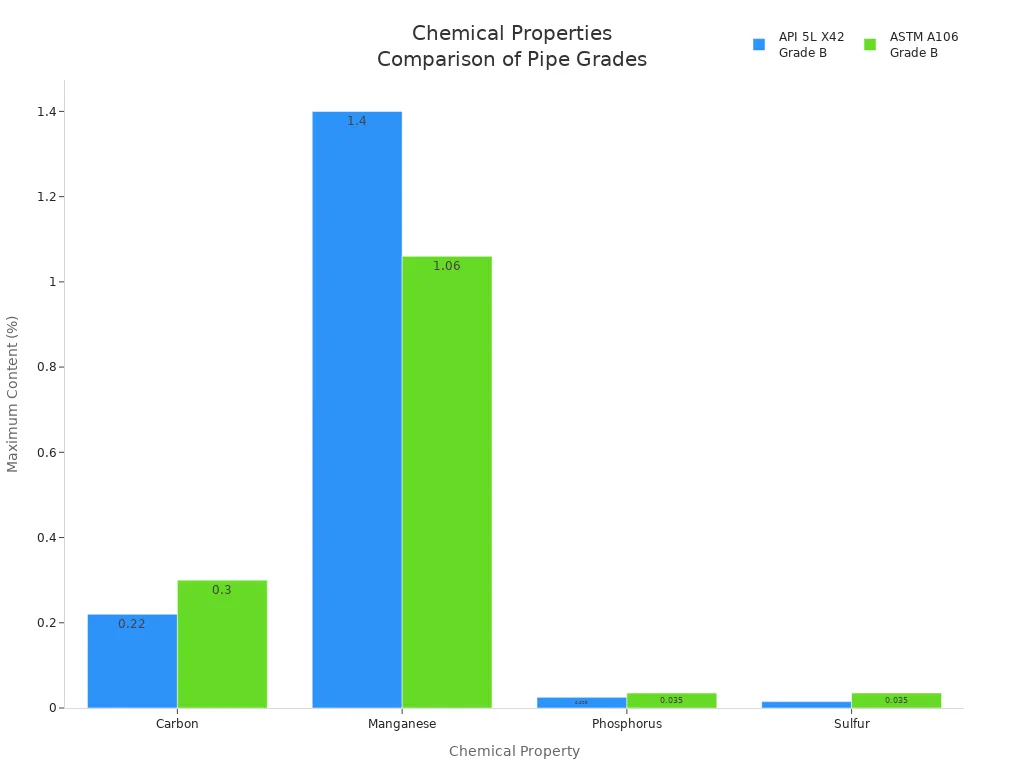
Here is a table that shows the main elements in API 5L X42 and A106B pipes:
Element | API 5L X42 | A106B |
|---|---|---|
Carbon | 0.22% max | 0.30% max |
Manganese | 1.40% max | 0.29-1.06% |
Phosphorus | 0.025% max | 0.035% max |
Sulfur | 0.015% max | 0.035% max |
Titanium | 0.04% max | N/A |
Silicon | N/A | 0.10% min |
Note: The lower carbon in API 5L helps prevent cracks during welding. The extra alloying elements make the pipe more flexible for different uses.
You can also see the differences in this chart:
A106B Pipe Composition
A106B pipe is a type of seamless carbon steel pipe. It has a higher carbon content than API 5L. This makes the pipe strong and able to handle high heat and pressure. You do not find alloying elements like titanium in A106B pipe. The focus stays on carbon, manganese, and silicon.
The higher carbon in A106B pipe gives it the power to work in boilers, refineries, and power plants. You choose this pipe when you need something tough for hot jobs.
Tip: If your project needs a pipe for high temperatures and pressure, A106B pipe is a smart choice because of its strong carbon steel makeup.
By looking at the chemical composition, you can see why api 5l line pipe fits oil and gas pipelines, while a106b pipe works best in high-temperature places.
Mechanical Properties And Performance
Strength And Ductility
You need to know how strong and flexible your pipe is before you choose it for your project. Strength tells you how much force the pipe can handle before it bends or breaks. Ductility shows how much the pipe can stretch without snapping. Both properties matter when you want a safe and reliable system.
Look at the numbers for minimum yield strength and tensile strength. These values help you compare api 5l pipe and a 106 pipe. Here is a table that shows the differences:
Pipe Grade | Minimum Yield Strength (psi) | Tensile Strength (psi) |
|---|---|---|
API 5L X42 | 42,100 | 60,200 |
API 5L X70 | 70,000 | 82,700 |
A106 Gr B | 35,000 | 60,000 |
You see that api 5l line pipe offers higher strength in many grades. This means you can use it for jobs that need tough pipes. A106b pipe gives you good strength and flexibility for high-temperature work.
Tip: If you need a pipe for high-pressure oil and gas transport, choose a grade of api 5l pipe with higher yield strength.
High-Temperature And Pressure Suitability
You must match your pipe to the job’s heat and pressure needs. A 106 pipe works best in places with high heat, like boilers and refineries. It stays strong even when temperatures reach 750°F. This makes it perfect for steam and hot fluids.
API 5L pipe is made for moving oil and gas over long distances. It handles high pressure well, so you can use it in pipelines that cross land or sea. Here is a table that shows where each pipe fits:
Pipe Type | Application | Key Properties |
|---|---|---|
ASTM A106 | High-temperature systems | High heat resistance, elasticity |
API 5L | Long-distance transport | Scalability, pressure adaptability |
ASTM A106: You use it for steam lines and heated fluids. It resists heat and keeps its shape.
API 5L: You use it for oil and gas pipelines. It adapts to high pressure and large projects.
Note: A106b pipe is the best choice for high-temperature jobs. API 5L pipe is ideal for high-pressure pipelines.
You can now see how mechanical properties help you pick the right pipe for your project.
Testing And Quality Requirements
API 5L Pipe Testing
API 5L pipes must pass many tests before use. These tests make sure the pipe is strong and safe. Every API 5L pipe gets a hydrostatic test. This test checks if the pipe can hold high pressure without leaks. Workers also check the pipe’s size to make sure it fits right. They test the pipe’s material to see what it is made of and how strong it is.
API 5L pipes get non-destructive testing too. These tests use sound waves, X-rays, or magnets to look for hidden problems. The pipe does not get damaged during these tests. API 5L pipes come with special papers called mill test certificates. These papers show where the pipe came from and prove its quality.
Here is a table that shows the main tests for API 5L and A106 pipes:
Procedure Type | API 5L Requirements | A106 Requirements (General) |
|---|---|---|
Hydrostatic Testing | Required for all pipes to ensure structural integrity. | Typically required for pressure applications. |
Dimensional Inspection | Mandatory to verify compliance with specified dimensions. | Required to ensure proper fit and function. |
Material Verification | Essential to confirm chemical composition and mechanical properties. | Similar verification required for quality assurance. |
Non-Destructive Testing (NDT) | Additional tests like ultrasonic, magnetic particle, or radiographic testing may be needed for critical applications. | NDT may be required depending on application. |
Documentation | Mill test certificates must accompany shipments for traceability. | Documentation requirements vary by project. |
A106 Pipe Testing
A106 pipes also go through important tests. They get a hydrostatic test to check for leaks and strength. Workers check the pipe’s size to make sure it fits your system. They test the pipe’s material to see what it is made of and how strong it is.
A106 pipes do not always need as many non-destructive tests. Sometimes workers use sound waves or magnets to check for problems. These tests depend on what your project needs. A106 pipes come with papers that show the tests done. The papers you get depend on your project.
API 5L pipes get more non-destructive tests.
These tests use sound waves, X-rays, or magnets.
A106 pipes use fewer special tests.
You can trust Yuan Steel Pipe to give you API 5L line pipes that pass all tests. This helps your pipeline work safely and well.
Application Areas For API 5L And A106 Pipe
Oil And Gas Transport With API 5L Line Pipe
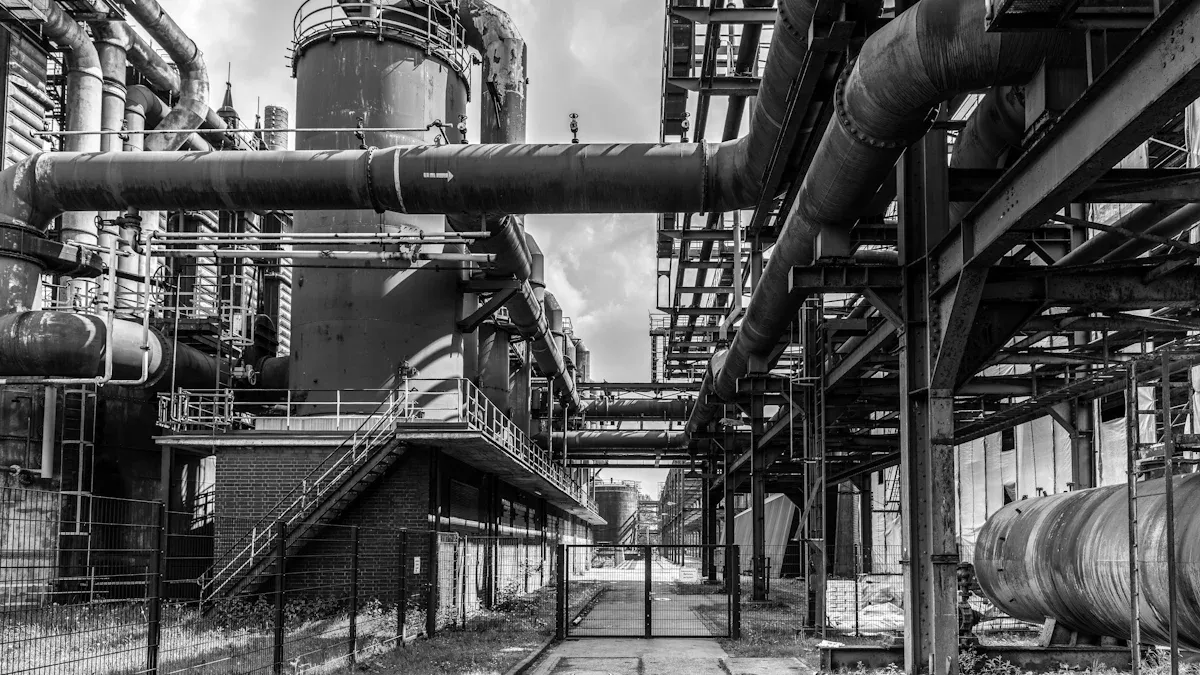
API 5L pipe is used in oil and gas systems. These pipes move oil and gas from wells to refineries. They also move oil and gas to storage tanks. You can use API 5L line pipe for gathering lines. It is also used for main transmission pipelines. The pipe handles high pressure well. It keeps the flow safe and steady. You pick different grades for strength.
API 5L line pipe works for land and sea projects. It is trusted for moving oil and gas far.
Here is a table that shows where each pipe is used:
Pipe Type | Application Areas |
|---|---|
API 5L | Oil and gas transmission systems, including gathering lines and main transmission pipelines |
A106 | High-temperature applications, particularly in power generation facilities, steam transmission systems, and chemical processing plants |
API 5L pipe’s chemical properties help stop cracks. They also make welding easier. API 5L X42 Grade B has better weldability and formability. This makes it good for pipelines needing strong joints.
High-Temperature Service With A106B Pipe
A106B pipe is used when projects need to handle high heat. This pipe works best in power plants. It is also used in steam transmission systems and chemical plants. The higher carbon makes A106 pipe stronger. It also helps the pipe resist heat. You can trust it for steam lines and boilers.
A106B pipe stays strong when temperatures go up. It works well in tough places.
Here is a table that compares properties and uses:
Property | API 5L X42 Grade B | ASTM A106 Grade B |
|---|---|---|
Carbon | 0.22% max | 0.30% max |
Manganese | 1.40% max | 0.29-1.06% |
Phosphorus | 0.025% max | 0.035% max |
Sulfur | 0.015% max | 0.035% max |
Silicon | N/A | 0.10% min |
Application Area | Oil and gas transmission systems | High-temperature applications |
Key Characteristics | Improved weldability and formability | Enhanced strength and heat resistance |
API 5L pipes: Used for oil and gas transmission. They are made to handle pressure and stay strong.
A106 pipes: Used for high-temperature jobs. They work well in steam and power plants.
You can see how API 5L pipe and A106 pipe fit different jobs. Pick the pipe that matches your project’s needs for the best results.
Choosing API 5L Or A106 Pipe
Project Requirements And Selection Factors
You need to pick the right pipe for your project. There are many things to think about. Each project needs different pressure, temperature, welding, size, and cost. If you match the pipe to your project, it works better and is safer.
Here is a table to compare api 5l pipe and a 106 pipe:
Factor | API 5L | A106 |
|---|---|---|
Primary Application | Oil, gas, and water transport | High-temperature, high-pressure piping |
Manufacturing | Seamless and Welded | Seamless only |
Typical Use | Pipelines, offshore lines | Refineries, boilers, power plants |
Temperature Capability | Up to ~425°C (varies by grade) | Up to ~425°C (800°F) |
Key Property | Toughness, crack resistance | Reliability, safety |
Common Grades | X42, X52, X65, X70 | Grade B |
Cost Considerations | More options, sometimes higher cost | Simpler, often lower cost |
Ask yourself these questions:
Does your project move oil or gas far? Use api 5l line pipe.
Is your project in a hot place like a power plant? Pick a106b pipe.
Will your system have high pressure? Both pipes work, but seamless pipes are best.
Do you need easy welding? API 5L gives more choices.
Do you want to save money? Welded API 5L pipes may help.
Tip: Always check if the pipe fits your pressure and temperature needs. Think about corrosion resistance if your project is in a tough place. Pick a pipe that is simple to install and take care of.
Some people make mistakes when picking pipes. They forget to check ratings, ignore corrosion, or choose too many types. You can avoid these mistakes by planning and asking your supplier for help.
Cost, Availability, And Customization
You should also think about cost, how fast you can get the pipe, and special features. API 5L can be cheaper for high-pressure jobs. Welded pipes usually cost less than seamless pipes. If you need a special size or coating, find a supplier who can customize your order.
Yuan Steel Pipe offers many ways to customize api 5l pipe. You can ask for custom logos, packaging, or graphics if your order is at least 25 tons. You can also get special lengths, coatings, or extra tests. This helps you get the pipe you need.
Customization Type | Minimum Order Requirement |
|---|---|
Customized logo | 25 tons |
Customized packaging | 25 tons |
Graphic customization | 25 tons |
Yuan Steel Pipe ships pipes all over the world. They use strong logistics to deliver pipes on time. Sometimes, they ship orders in just 25 days. They work with many suppliers to handle big orders. This means you get your pipes faster, even for large projects. You also get quality checks, so your pipes meet all standards.
Note: Fast shipping and good quality control help your project finish on time and follow safety rules.
When you pick between api 5l pipe and a 106 pipe, think about your project’s needs, your budget, and how fast you need the pipes. Yuan Steel Pipe can help with global supply and custom solutions for api 5l line pipe.
You have learned the big differences between API 5L and A106 pipe. API 5L is used to move oil, gas, and water. A106 pipe is for jobs with high heat and pressure, like in refineries and power plants. The table below shows how each pipe is used for different jobs:
Pipe Type | Primary Application | Manufacturing | Typical Use | Key Properties | Temperature Capability |
|---|---|---|---|---|---|
A106 | High-temperature, high-pressure process piping | Seamless only | Refineries, boilers, power plants | Superior reliability and safety | Up to ~425°C (800°F) |
API 5L | Transportation of oil, gas, and water | Seamless and Welded | Cross-country pipelines, offshore lines | High toughness and crack resistance | N/A |
Think about what your project needs. If you are not sure, you can ask the experts at Yuan Steel Pipe for advice.
FAQ
What is the main difference between API 5L and A106 pipes?
You use API 5L pipes for oil and gas transport. You use A106 pipes for high-temperature jobs like boilers and refineries. API 5L offers both seamless and welded options. A106 pipes are always seamless.
Can you weld both API 5L and A106 pipes?
You can weld both types. API 5L pipes have lower carbon, which makes welding easier. A106 pipes can be welded, but you must follow special steps because of higher carbon content.
Which pipe should you choose for high-pressure applications?
You should pick seamless pipes for high-pressure jobs. Both API 5L and A106 pipes offer seamless options. API 5L has higher strength grades for tough oil and gas pipelines.
Does Yuan Steel Pipe offer customization for API 5L pipes?
Yes! You can request custom lengths, coatings, logos, and packaging for API 5L pipes from Yuan Steel Pipe. Minimum order is 25 tons for special features.
Please Contact Us!
Recommended Products

API 5L X52 PSL1/ PSL2 Line Pipe
API 5L X60 PSL1 Line Pipe
API 5L X70 PSL2 Line Pipe
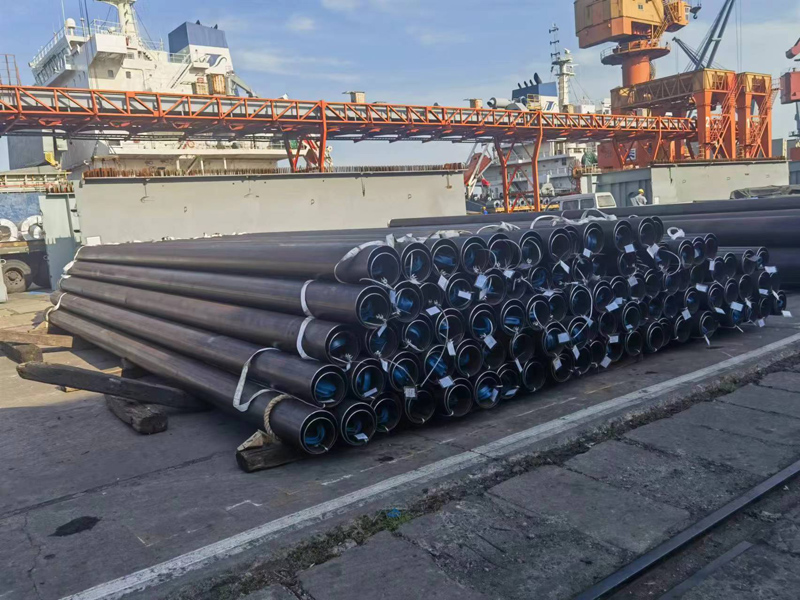
API 5L GrB ERW Line Pipe

API 5L Grade B ERW Steel Pipe
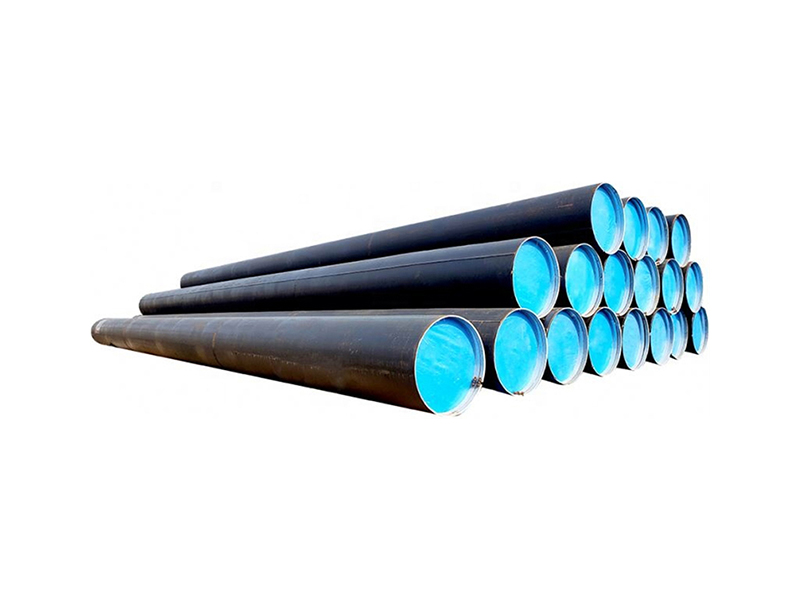
API 5L Seamless Pipe | Industrial Seamless Carbon Steel Pipe for Oil, Gas
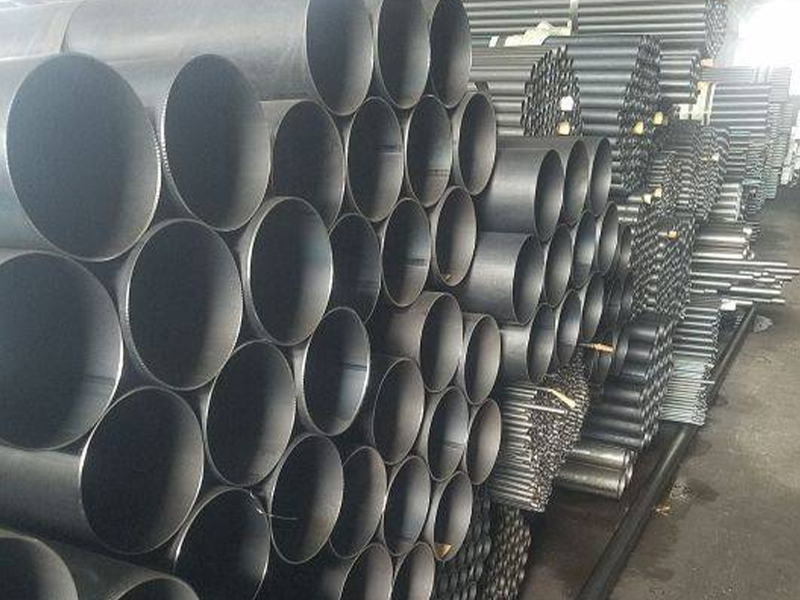
Carbon Steel Welded Pipe丨API 5L, ASTM A53 Steel Tubes
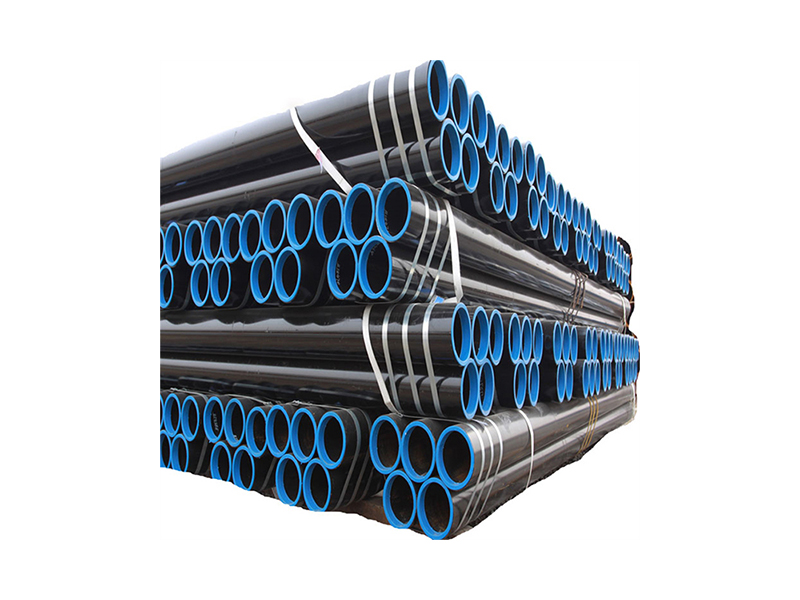
ASTM A106 Grade C Seamless Pipe
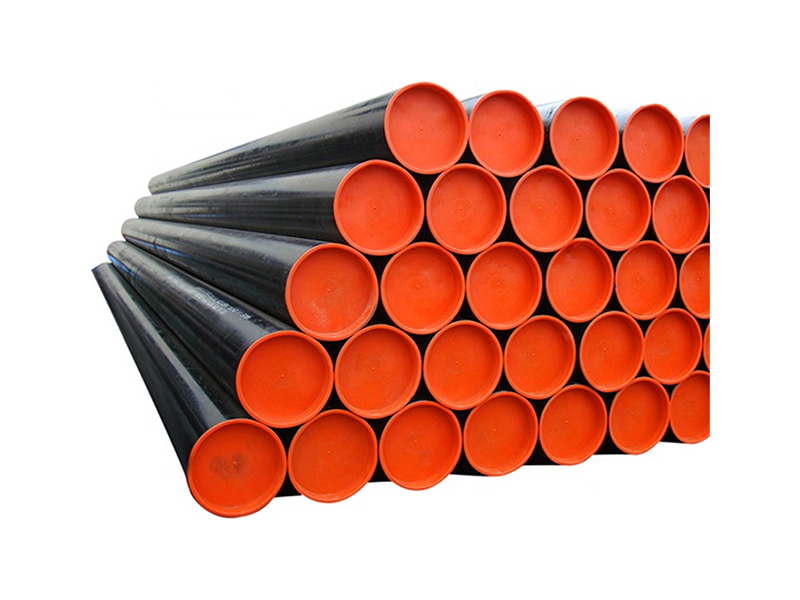
ASTM A106 Grade B Seamless Pipe


Recent News
1.Innovation in API 5L PSL1 Line Pipe: Efficiency Meets Reliability
2025-11-032.What's the meaning of API 5L for line pipe?
2025-12-173.API 5L Grade B vs. ASTM A53 Grade B: The Ultimate Guide to Choosing the Right Steel Pipe
2026-02-044.API 5L Line Pipe Guide: Specifications, Grades, and Industrial Applications Explained
2026-01-305.What Is the Difference Between ASTM A106 Grade B and Grade C?
2026-01-156.What is the difference between API 5L GR B and X52?
2026-02-06


