


Seamless vs ERW vs LSAW vs SSAW Line Pipe: Which Should You Choose?
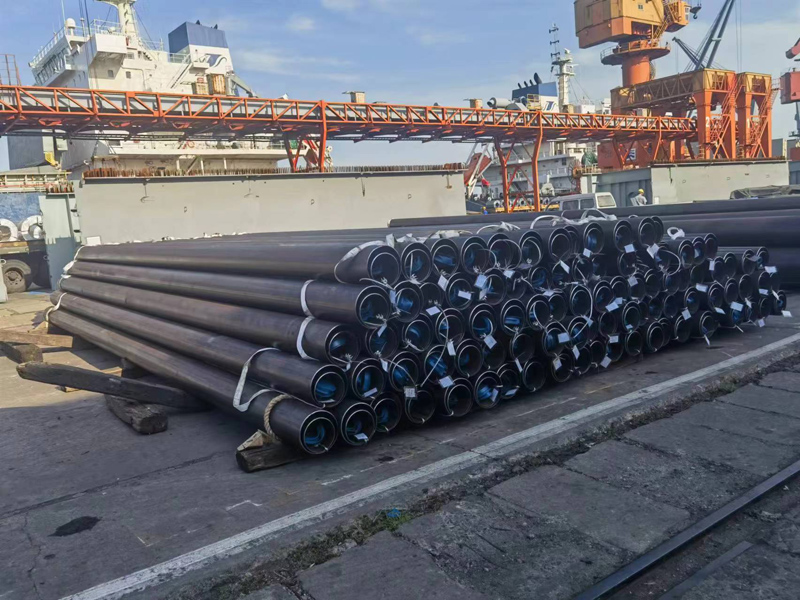
When purchasing API 5L line pipe, choosing the right manufacturing process is an important part of pipeline design and procurement. Buyers commonly compare API 5L seamless line pipe, ERW, LSAW, and SSAW pipe based on pipe diameter, wall thickness, pressure requirements, project specifications, delivery time, and total cost.
However, there is no single pipe manufacturing process that is suitable for every project. The right choice depends on the applicable standard, pipe grade, PSL level, dimensions, service conditions, inspection requirements, and application.
This guide compares seamless, ERW, LSAW, and SSAW API 5L pipe and explains how buyers can select the appropriate option for oil and gas transmission, water transportation, and other pipeline projects.
What Is API 5L Line Pipe?
API 5L line pipe is steel pipe manufactured according to API Specification 5L for pipeline transportation systems. API 5L covers both seamless and welded steel pipe and establishes requirements for manufacturing, material specifications, inspection, testing, marking, and traceability.
API 5L pipe is available in different grades, including Grade B, X42, X52, X60, X65, X70 and other grades depending on the required specification and product availability.
API 5L pipe can also be supplied under different Product Specification Levels, primarily PSL1 and PSL2. The required PSL should be confirmed according to the project specification and service conditions.
Seamless vs ERW vs LSAW vs SSAW: Quick Comparison
| Pipe Type | Manufacturing Process | Typical Advantage | Common Considerations |
|---|---|---|---|
| Seamless | Produced from solid steel billet without a longitudinal weld | Suitable for many demanding pressure and temperature applications | Size range and cost should be checked against project requirements |
| ERW | Steel strip or coil is formed and electrically resistance welded | Efficient production for many small and medium diameter applications | Weld quality, NDT and applicable specification need to be confirmed |
| LSAW | Steel plate is formed and longitudinally submerged arc welded | Suitable for large-diameter pipeline applications | Plate quality, weld inspection and dimensional requirements are important |
| SSAW | Steel strip is formed into a spiral and submerged arc welded | Can provide a practical option for large-diameter pipeline projects | Project specifications and weld inspection requirements must be verified |
The manufacturing process should not be selected independently from the project specification. A buyer should first confirm the required API 5L grade, PSL, diameter, wall thickness, service conditions, testing requirements, and applicable project standard.
API 5L Seamless Line Pipe
API 5L seamless line pipe is manufactured from a solid steel billet. The billet is heated and pierced to create a hollow tube, followed by rolling, sizing, heat treatment when required, and inspection.
How Is Seamless Line Pipe Manufactured?
Steel billet preparation
Billet heating
Rotary piercing
Rolling and sizing
Heat treatment according to the applicable specification
Non-destructive testing and dimensional inspection
Hydrostatic testing where required
Final inspection, marking and documentation
When Should You Consider API 5L Seamless Pipe?
Seamless pipe may be considered when the project specification requires seamless construction or when the required dimensions and service conditions are well matched to seamless production.
Seamless pipe is also widely used in high-temperature and high-pressure industrial applications. For example, ASTM A106 Grade B is a seamless carbon steel pipe specification commonly used for high-temperature service.
API 5L ERW Line Pipe
ERW stands for Electric Resistance Welded. In the ERW process, steel strip or coil is formed into a cylindrical shape and the edges are joined through electrical resistance welding.
API 5L ERW pipe can be supplied for various pipeline applications, particularly where the required diameter, wall thickness, grade, and project specification are compatible with ERW production.
Advantages of ERW Line Pipe
Efficient manufacturing process
Suitable for many small and medium diameter pipe applications
Can provide competitive procurement costs for suitable specifications
Consistent dimensional production when manufactured under controlled conditions
Suitable for applications where ERW is permitted by the project specification
Buyers should pay particular attention to weld quality, non-destructive testing, hydrostatic testing, dimensional inspection, and material traceability when purchasing ERW line pipe.
API 5L LSAW Line Pipe
LSAW means Longitudinal Submerged Arc Welded. LSAW pipe is manufactured from steel plate that is formed into a cylindrical shape and welded along the longitudinal seam using submerged arc welding.
Why Is LSAW Used for Large-Diameter Pipe?
LSAW production is well suited to large-diameter and relatively thick-wall steel pipe because the pipe is manufactured from steel plate rather than narrow strip or billet.
LSAW can therefore be considered for large-diameter oil and gas pipelines, water transmission systems, structural applications, and other projects where the required dimensions and specification are suitable.
What Should Buyers Check When Purchasing LSAW Pipe?
Steel plate grade and chemical composition
Longitudinal weld quality
Weld NDT requirements
Hydrostatic testing
Dimensional tolerances
Impact testing where specified
Heat number and material traceability
Mill Test Certificate and inspection records
API 5L SSAW Line Pipe
SSAW means Spiral Submerged Arc Welded. In the SSAW manufacturing process, steel strip is formed into a spiral tube and the spiral seam is welded using submerged arc welding.
SSAW pipe can be considered for certain large-diameter and long-distance pipeline applications where the project specification permits spiral welded pipe.
Common Applications of SSAW Pipe
Water transmission pipelines
Oil and gas pipeline projects where permitted by specification
Long-distance transmission systems
Industrial fluid transportation
Large-diameter pipeline infrastructure
Because SSAW pipe uses a spiral weld, buyers should confirm that the project specification accepts this manufacturing method and should review the required weld inspection and testing procedures before placing an order.
API 5L Grade B Pipe: Seamless or ERW?
API 5L Grade B pipe can be available in different manufacturing forms, including seamless and welded pipe, depending on the supplier's product range and the applicable specification.
When comparing API 5L Grade B seamless and ERW pipe, buyers should not choose based only on whether the pipe is seamless or welded. The project specification should determine the acceptable manufacturing process.
API 5L Gr B Seamless Pipe
API 5L Gr B seamless pipe has no longitudinal weld seam and is manufactured from solid billet. It may be suitable when the project specification requires seamless pipe or when the required size and service conditions match seamless production.
API 5L Gr B ERW Pipe
API 5L Gr B ERW pipe is produced by forming steel strip or coil and welding the longitudinal seam using electric resistance welding. It can provide an efficient option for compatible diameter and wall thickness requirements.
The final selection should be based on the complete project specification, including pressure, temperature, dimensions, testing, corrosion requirements, and applicable pipeline codes.
API 5L Grade B vs ASTM A106 Grade B: Are They the Same?
No. API 5L Grade B pipe and ASTM A106 Grade B pipe are covered by different standards and should not be treated as interchangeable simply because both use the designation "Grade B."
| Item | API 5L Grade B | ASTM A106 Grade B |
|---|---|---|
| Primary Standard | API Specification 5L | ASTM A106 |
| Main Application | Pipeline transportation systems | High-temperature service |
| Pipe Type | Seamless and welded options depending on specification | Seamless carbon steel pipe |
| Typical Use | Oil, gas and other pipeline transportation | Power plants, refineries, boilers and high-temperature piping |
An A106 pipe should therefore be specified according to ASTM A106 rather than being described only as "Grade B." Likewise, an API 5L pipe should include the applicable API 5L grade and PSL where required.
For procurement, a specification such as ASTM A106 Grade B or API 5L Grade B provides much clearer information than simply requesting "carbon steel Grade B pipe."
How to Choose the Right Line Pipe for Your Project?
The choice between seamless, ERW, LSAW, and SSAW should be based on the complete technical and commercial requirements of the project.
1. Confirm the Applicable Standard
Start by confirming whether the project requires API 5L, ISO 3183, ASTM, EN, or another standard. For pipeline transportation, API 5L is commonly specified for the applicable line pipe.
2. Select the Required Grade
Common API 5L grades include Grade B, X42, X52, X60, X65, and X70. The required grade should be determined by the engineering specification and design conditions rather than selected only according to price.
3. Confirm PSL1 or PSL2
API 5L PSL1 and PSL2 have different technical requirements. PSL2 generally includes additional controls and testing requirements, and certain service conditions may require PSL2 or additional sour-service requirements.
4. Specify Pipe Diameter and Wall Thickness
Pipe OD and wall thickness directly affect manufacturing feasibility, pressure design, weight, cost, and transportation. Specify the required outside diameter and wall thickness rather than only using a nominal pipe size.
5. Select the Manufacturing Process
Once the specification and dimensions are known, determine whether seamless, ERW, LSAW, or SSAW is permitted. For large-diameter requirements, welded pipe may offer practical manufacturing options, while smaller or specific high-temperature applications may be suitable for seamless pipe.
6. Confirm Testing and Inspection
Depending on the project, buyers may need hydrostatic testing, ultrasonic testing, radiographic testing, impact testing, chemical analysis, tensile testing, dimensional inspection, and third-party inspection.
7. Confirm Coating and End Finish
For pipelines exposed to corrosive environments, specify the required external or internal coating. Common options may include 3PE, 3LPE, 3PP, FBE, painting, or other project-specific systems.
8. Consider Delivery and Logistics
Pipe weight, length, diameter, quantity, packaging, loading method, destination port, and shipping schedule can significantly affect the landed cost and delivery time.
Seamless vs ERW vs LSAW vs SSAW: Which One Should You Choose?
There is no universal answer because the appropriate manufacturing process depends on the project specification.
| Project Requirement | Possible Option to Consider | Key Point to Verify |
|---|---|---|
| Seamless pipe required by specification | Seamless | Grade, size, WT, heat treatment and testing |
| Small or medium diameter line pipe | ERW or seamless, depending on specification | Manufacturing method, weld inspection and cost |
| Large-diameter pipeline | LSAW or SSAW, where permitted | Project standard, weld quality, NDT and dimensions |
| Oil and gas transmission | API 5L seamless or welded pipe | Grade, PSL, sour service, coating and testing |
The most important point is to select the pipe based on the complete engineering requirement rather than assuming that one manufacturing process is automatically better than another.
What Should You Include in an API 5L Pipe RFQ?
A detailed RFQ helps suppliers provide an accurate quotation and reduces the risk of receiving technically incompatible offers.
Standard: API 5L / ISO 3183
Grade: Grade B, X42, X52, X60, X65, X70, etc.
PSL: PSL1 or PSL2
Manufacturing type: Seamless, ERW, LSAW or SSAW
Outside diameter: Required OD
Wall thickness: Required WT or schedule
Length: SRL, DRL, fixed length, 6 m, 12 m, etc.
Pipe ends: Plain end, beveled end, threaded end, etc.
Coating: 3PE, 3LPE, FBE, 3PP or other specified coating
Testing: Hydrostatic, UT, RT, impact, tensile or other requirements
Inspection: Mill inspection or third-party inspection
Documents: MTC/MTR, inspection report, packing list and certificate requirements
Quantity: Total tonnage or number of pipes
Destination: Delivery port or final destination
Trade terms: EXW, FOB, CFR, CIF or other required Incoterm
Why Source API 5L Pipe from Yuan Steel?
Yuan Steel supplies a range of API 5L pipe products, including seamless and welded line pipe options. Its current product range covers API 5L Grade B, X42, X52, X60, X65 and X70, subject to specification and availability.
Yuan Steel also supplies ASTM A106 seamless carbon steel pipe, including ASTM A106 Grade B, for high-temperature industrial applications.
Product Range
API 5L seamless line pipe
API 5L ERW line pipe
API 5L LSAW line pipe
API 5L SSAW line pipe
API 5L Grade B pipe
API 5L X42, X52, X60, X65 and X70 pipe
ASTM A106 Grade B seamless pipe
Other carbon steel pipe products according to project requirements
Stock and Supply Capability
Yuan Steel states that it operates as a direct mill agency and maintains substantial pipe inventory, with more than 15,000 tons of stock stated on its current line pipe page. Stock availability should be confirmed for the exact grade, size, wall thickness, quantity and coating required for each project.
Coating and Custom Requirements
Depending on the product and project specification, available options include black painting, varnishing, FBE, 3PE, 3LPE, 3PP, and CRA clad or lined solutions.
Buyers should provide complete technical requirements when requesting a quotation so that the supplier can confirm product availability, manufacturing method, inspection requirements, coating, lead time and shipping options.
API 5L Pipe Buying Checklist
Before placing an order for API 5L line pipe, use the following checklist:
Confirm API 5L or other required standard
Confirm Grade B, X42, X52, X60, X65, X70 or other required grade
Confirm PSL1 or PSL2
Confirm seamless, ERW, LSAW or SSAW construction
Confirm outside diameter
Confirm wall thickness
Confirm pipe length
Confirm pipe ends
Confirm coating requirements
Confirm hydrostatic and NDT requirements
Confirm impact and mechanical testing where applicable
Confirm MTC/MTR requirements
Confirm third-party inspection requirements
Confirm quantity and packaging
Confirm delivery destination and Incoterm
Confirm production or stock lead time
FAQ About API 5L Line Pipe
Is API 5L pipe seamless or welded?
API 5L covers both seamless and welded steel pipe. Depending on the required dimensions and project specification, API 5L pipe may be supplied as seamless, ERW, LSAW, or SSAW pipe.
What is the difference between API 5L Grade B and ASTM A106 Grade B?
API 5L Grade B is a line pipe grade under API Specification 5L, while ASTM A106 Grade B is a seamless carbon steel pipe grade intended for high-temperature service. They are different standards and should not be treated as interchangeable without confirming the applicable engineering requirements.
Is API 5L Grade B available as seamless pipe?
Yes. API 5L Grade B seamless pipe is a commonly supplied product, subject to the required dimensions, PSL and supplier availability.
Is ERW pipe suitable for API 5L applications?
API 5L includes welded pipe requirements, and ERW pipe can be supplied for applications where the required grade, dimensions, manufacturing process, testing and project specification permit ERW construction.
Which is better, seamless or welded API 5L pipe?
Neither should be considered universally better. The appropriate option depends on the project specification, diameter, wall thickness, service conditions, required testing, availability and total procurement cost.
What is A106GrB pipe?
A106GrB is a commonly used search and product-name variation for ASTM A106 Grade B seamless carbon steel pipe. It is primarily associated with high-temperature industrial piping applications such as refineries, power plants and boilers.
Final Takeaway
When comparing seamless vs ERW vs LSAW vs SSAW line pipe, the key question is not simply which manufacturing process is better. The correct question is which process meets the complete technical and commercial requirements of your pipeline project.
For API 5L line pipe, buyers should confirm the standard, grade, PSL, manufacturing method, OD, wall thickness, length, pipe ends, coating, testing, inspection and documentation before ordering.
If you are comparing API 5L seamless line pipe, ERW, LSAW, SSAW, or ASTM A106 Grade B pipe, provide your required grade, size, wall thickness, quantity, coating and destination to the supplier. This allows the supplier to recommend technically compatible products and provide a more accurate quotation.
Request an API 5L Pipe Quote
Looking for API 5L Grade B, X42, X52, X60, X65 or X70 line pipe? Contact Yuan Steel with your required standard, grade, PSL, pipe size, wall thickness, manufacturing method, quantity, coating and destination to check availability and request a quotation.
Please Contact Us!


Recent News
1.What Makes Best China Api 5l Seamless Steel Pipe the Ideal Choice for Global Buyers
2026-09-092.API 5L Grade B PSL1 vs PSL2: Differences, Specifications & Selection Guide
2026-08-213.API 5L Grade B Pipe Buying Guide for Oil and Gas Pipeline Projects
2026-08-214.X42 X52 X60 X65 Line Pipe Selection Guide for Oil & Gas Projects
2026-07-225.How to Choose a Reliable China API 5L Line Pipe Supplier?
2026-07-176.Top 10 API 5L Pipe Stockists and Distributors 2026
2026-06-267.What is API 5L B Pipe? The Ultimate Guide for Oil & Gas Projects
2026-05-078.Tips for sourcing reliable API 5L Grade B pipe suppliers in 2026
2026-04-30


